
Author: Marián Šeliga, Head of China desk, Advisor to the Board of J&T bank
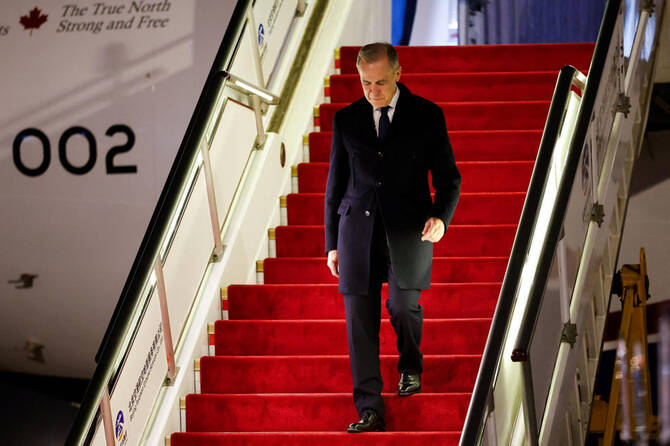
Canadian Prime Minister Mark Carney visited China last week, becoming the first Canadian leader to make an official trip to Beijing in nearly a decade. During the visit, Canada and China reached an agreement to significantly reset their economic and trade relations, surprising many Western observers.
The centerpiece of the agreement was a dramatic cut in Canada’s tariff on electric vehicles (EVs) imported from China. Previously, Canada had imposed a 100 % surtax on Chinese EVs, effectively shutting out most imports of these vehicles as part of broader trade tensions. Under the new deal, Canada will now allow up to 49,000 Chinese EVs annually at a tariff rate of 6.1 %, a level comparable to the pre‑tariff rate and a fundamental change in approach.
This move opens the Canadian EV market to Chinese automakers, offering consumers access to more affordable electric vehicles and signaling a willingness by Ottawa to diversify trade relationships even where they diverge from U.S. protectionist policies. This move will definitely change the market with cars and may create a competetive environment for the cars imported from the US.
In exchange, China has agreed to significantly reduce tariffs on key Canadian agricultural exports, including canola seed (from very high rates down to about 15 %) and lift anti‑discrimination duties on products like lobster, peas, and crab. This part of the deal is expected to help Canadian farmers recover lost market share and expand exports.
Carney framed the agreement as a pragmatic step to broaden Canada’s economic partnerships and access global supply chains, while also boosting investment and cooperation in sectors like clean energy and agriculture. China, for its part, welcomed the reduction of punitive measures on EVs as beneficial for Chinese manufacturers seeking new markets.
This pivot comes amidst strained relations with the United States over tariffs and trade policy, and while Canada remains strategically aligned with its neighbours, the China‑Canada deal reflects Ottawa’s desire to exercise autonomy in its foreign economic policy.
Overall, the visit and its outcomes are widely seen as a practical recalibration of Canada‑China relations, with real implications for trade, consumer choice, and geopolitical balance in the context of rising U.S.‑China tension.
Just a week after the visit to China, the Canadian Prime Minister delivered a landmark speech at the World Economic Forum in Davos, Switzerland. This speech was merely a continuation of Canada’s actual policy direction, as the country has decided it will no longer kowtow to Donald Trump’s policies.
Some observers, particularly strong critics of China, have argued that the measures taken by Canada are not a clever long-term strategy, warning that China may use this shift in Canadian policy toward Beijing to advance its own interests. Nevertheless, these experts often overlook the fact that the current U.S. administration behaves in much the same way as Beijing.
Against this background, it is highly likely that European Union member states—especially those that were previously committed to transatlantic unity and fully complied with guidance from Washington on how to respond to China’s coercive policies, export surpluses, dominance in rare earths, and other related issues—will follow suit and begin developing their own independent approach to economic relations with China.
At the end of 2025, President Macron visited China. German Chancellor Merz is next, and other EU leaders may follow. Ultimately, global politics has always been driven by concrete economic and pragmatic interests of countries rather than by fine-sounding words.
 Global News Insider