
Author: Marián Šeliga, Head of China desk at J&T Bank
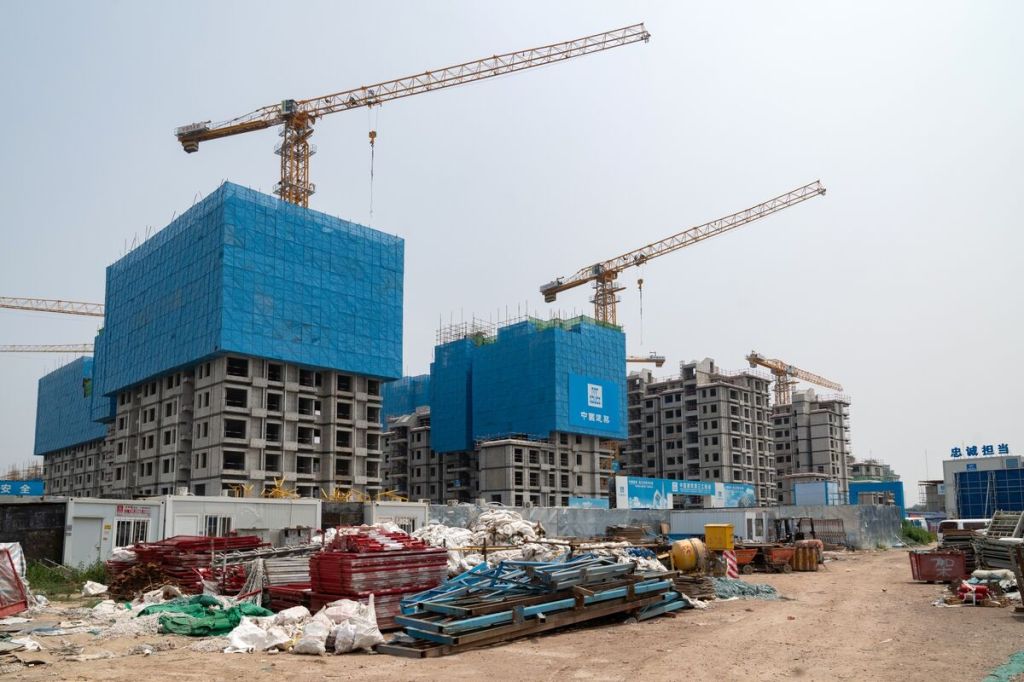
The Chinese property developer Vanke* is facing the most challenging period in its history. Since the onset of the COVID-19 pandemic, strict deleveraging measures introduced under President Xi Jinping, together with a steep fall in apartment sales, have placed many Chinese property developers under severe financial strain. While Evergrande has been the most high-profile example of this crisis, Vanke represents an even more intriguing case.
For more than four years, the challenges in China’s property sector have remained one of the most prominent economic concerns. The main issues center on elevated local debt levels and a real estate market plagued by a large number of unfinished or unsold properties, which together pose significant economic risks.
However, compared with other property players such as Evergrande, Country Garden or Sunac, Vanke is more deeply connected with China’s financial system. Combined with the fact that China’s property market has not stopped falling, some argue that the authorities might intervene at the last minute.
In recent weeks, attention has turned to whether the government will rescue Vanke and what this would signal about China’s real estate policy direction.
Shenzhen Metro Group, Vanke’s largest state shareholder, has already extended approximately RMB 30.8 billion in loans to the company. Under the framework agreement signed last November, Shenzhen Metro is permitted to provide only an additional RMB 2.29 billion in financing to Vanke by June 30 of this year.
But the problems inside the company are so serious, that the financial injection from Metro Group will be not enough.
According to some sources in real estate industry Vanke’s debt hole is “bottomless.” When Shenzhen Metro provided shareholder loans, it may have received some good assets from Vanke, but those assets have dropped in value — making it difficult for Shenzhen Metro to provide more capital.
Industry sources have also noted that Vanke’s liabilities include off-balance-sheet financing and employee share-based investments, adding to the complexity of its financial situation. Chinese media Zaobao noted that while Evergrande’s liabilities were mainly due to unpaid supplier invoices spread across a broad and fragmented group of creditors, which may have reduced the potential impact on the financial system. In contrast, Vanke depends more heavily on financing from major institutional investors, such as insurance companies, suggesting that any failure to meet its obligations could pose much greater systemic risks.
According to Reuters (January 13th), China Vanke is seeking to further extend the grace period for a 2 billion yuan ($290 million) bond repayment by 90 trading days as it works to renegotiate a debt rollover plan with holders.
So far, apart from the loans provided by state entity Metro Group, the government appears to have taken a cautious approach to providing a bailout for Vanke, emphasizing that any support must comply with legal standards and market principles. What this means for buyers of unfinished apartments remains an open and important question. Meanwhile, nationwide data on apartment sales over the past year indicate a sharp decline in transactions. Property investment in China fell 15.9% year-on-year in the first 11 months and the slowdown in sales and investment reflected weak demand.
Given its status as an iconic developer, any collapse of Vanke would significantly undermine confidence in the housing market.
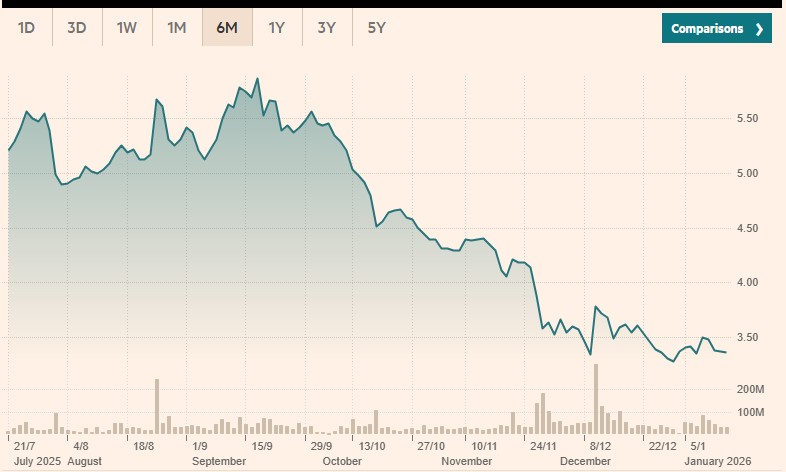
Trading of China Vanke at Hong Kong Stock Exchange (Source: FT)
* China Vanke Co Ltd is a China-based company mainly engaged in residential development and property services. The Company’s main business includes real estate development and related asset management and property services.
 Global News Insider