Author: Marián Šeliga, Head of China desk, J&T Bank a.s.
This is the first article in a series devoted to Venezuela–China relations, a topic that has moved to the forefront following the alleged abduction of Venezuela’s current president by U.S. special military forces. This initial article examines how the events have been officially covered by Chinese state media and government officials.
China has issued strong condemnations of the United States’ military operation in Venezuela and the subsequent demand that Caracas sever ties with Beijing, calling the actions a violation of international law and a threat to global stability.
Outrage Over Maduro’s Capture
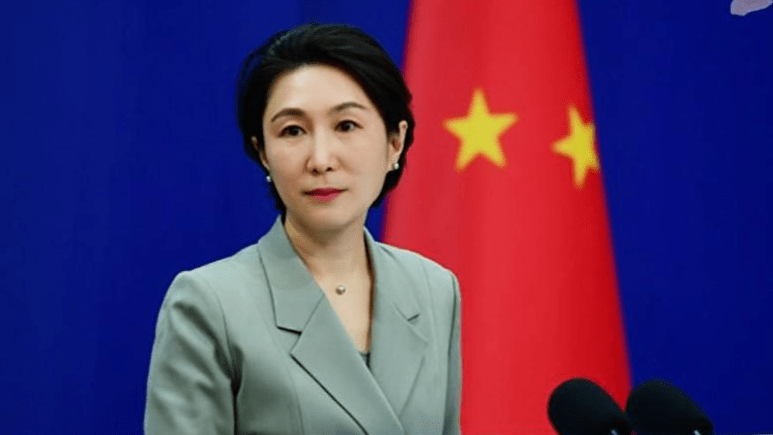
Chinese state media outlets, including Xinhua News Agency, People’s Daily, and the Global Times, characterized the forcible seizure of Venezuelan President Nicolás Maduro as unprecedented hegemonic behavior. Foreign Ministry spokesperson Mao Ning stated that China was deeply alarmed by what she termed Washington’s blatant use of force against a sovereign state. The timing of the operation, coming just hours after Maduro met with Chinese envoy Qiu Xiaoqi, was seen as particularly provocative.
Xinhua published an editorial declaring that the incursion exposed Washington’s reliance on unilateral force and undermined decades of American rhetoric about respecting international rules. The editorial emphasized that bypassing the United Nations Security Council demonstrated how the United States acts in direct opposition to international law. The Global Times highlighted that the arrest of a sitting president represents an unprecedented act in the post-Cold War era, one that has shocked global observers and political figures.
China’s Foreign Ministry issued multiple statements demanding the immediate release of Maduro and his wife, insisting that their personal safety must be prioritized. Officials emphasized that such hegemonic acts seriously violate international law and threaten peace and security throughout Latin America and the Caribbean region.
Criticism of Demands to Expel Foreign Partners
Chinese official representatives expressed even stronger disapproval when the Trump administration demanded that Venezuela expel agents from China, Russia, Iran, and Cuba while agreeing to partner exclusively with the United States on oil production. Foreign Ministry spokesperson Mao Ning characterized these demands as a clear violation of Venezuela’s sovereignty and an infringement on the rights of the Venezuelan people.
The South China Morning Post reported that Chinese officials view the American ultimatum as an attempt to control Venezuela’s oil reserves, the largest in the world, while simultaneously harming China’s economic interests. Mao Ning emphasized that Venezuela is a sovereign state with full permanent authority over its natural resources and economic activities, and that cooperation between China and Venezuela falls under the protection of international law.
Chinese Foreign Minister Wang Yi, speaking without explicitly mentioning the United States, declared that no country can act as the world’s police, nor can any nation claim to be the world’s judge. He stressed that the sovereignty and security of all countries should be fully protected under international law.
Concerns About Economic Interests
Multiple Chinese newspapers, including China Daily and the Global Times, highlighted concerns about China’s substantial investments in Venezuela. China has invested billions in Venezuela’s oil sector, including a 20-year pact signed last year by China Concord Resources Corporation to develop two Venezuelan oilfields. Venezuelan oil exports to China account for approximately 68 percent of Venezuela’s total petroleum exports, though this represents only about 4 percent of China’s overall oil imports.
The People’s Daily emphasized that American sanctions and military action have dealt a severe blow to Venezuela’s economic and social order while threatening the stability of global industrial and supply chains. Chinese analysts noted that the cooperation between China and Venezuela represents legitimate trade between two sovereign states and that China’s lawful rights and interests must be protected.
Strategic Implications
Chinese media outlets framed the American actions as part of a broader pattern of hegemonic behavior that undermines the rules-based international order. Commentary in the Global Times suggested that the United States is reverting to savage imperialism reminiscent of the 19th century, stirring up global tensions and disregarding established norms.
Several Chinese newspapers portrayed the situation as an opportunity for China to contrast itself against Washington’s approach and present itself as a defender of international law and the rules-based order.
Experts quoted in Chinese media suggested that Beijing would likely continue making diplomatic proclamations criticizing American actions rather than pursuing military or economic sanctions that could jeopardize the fragile trade truce between the two superpowers. The consensus across Chinese media outlets is clear: the American operation in Venezuela represents a dangerous precedent that threatens the stability of the international system and demonstrates Washington’s willingness to use force to reshape outcomes beyond its borders, regardless of international law or the sovereignty of other nations.
 Global News Insider