
Written by: Marián Šeliga, Advisor to the Board and Head of China desk at J&T bank
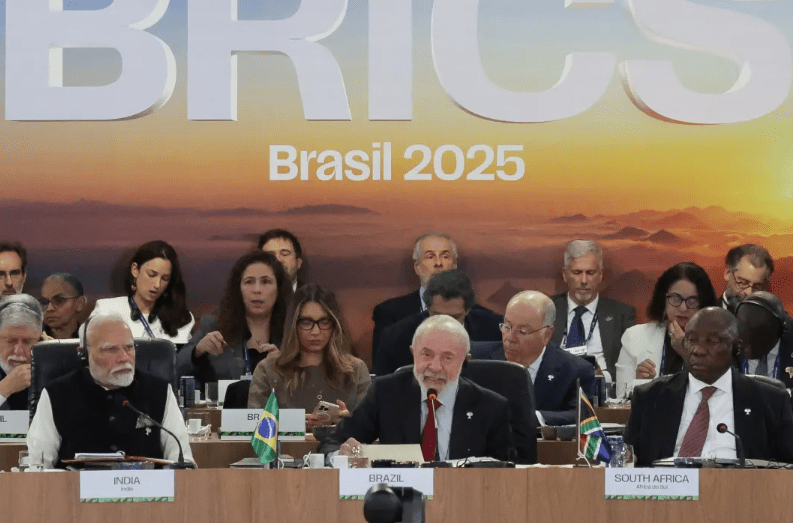
Since taking office in 2013, Xi Jinping has attended every BRICS summit until now. However, he did not participate in the latest summit in Rio de Janeiro, Brazil, sending Premier Li Qiang in his place. This is not the first time Li has represented Xi at international forums or on state visits abroad.
Media speculation suggests that his absence may be linked to the non-attendance of Russian President Vladimir Putin, as well as the presence of Indian Prime Minister Narendra Modi. In addition to participating in the summit, Modi is also paying a state visit to Brazilian President Lula, which means Modi is likely to receive heightened attention.
Although Putin’s absence has already been explained in the media, including by his advisor Ushakov, Xi’s non-attendance does not necessarily mean that China attaches little importance to this group or platform. China mainland interlocutors explain the absence of Xi because he has already met with Brazil’s leader twice in less than a year. At the same time, according to some observers, no significant new agreements were expected to be reached at the meeting, which is why Xi delegated a representative.
However, it is difficult to describe the current summit as one lacking in weighty topics. Almost all ten BRICS members, the bloc of emerging world economies, are currently engaged in sensitive trade negotiations with the United States regarding tariffs and trade barriers imposed by the U.S. administration. This is a highly sensitive and current issue that unites BRICS member states in their relationship with the United States and could have served as an opportunity to further strengthen ties within the platform.
Notably, in its statement BRICS condemned aggressive economic policies and the imposition of unilateral tariff barriers, without explicitly mentioning Donald Trump. Trump responded to the BRICS joint statement by warning that any country aligning itself with BRICS’s anti-American policy would face an additional 10% tariff.
In a joint statement released on Sunday, BRICS leaders also condemned Israeli and U.S. attacks on Iran. However, the statement largely skirted the issue of the war in Ukraine, instead criticizing Ukrainian attacks on Russian infrastructure.
 Global News Insider