
Author: Marián Šeliga
China to propose its “peace plan” to resolve the Russian-Ukrainian war
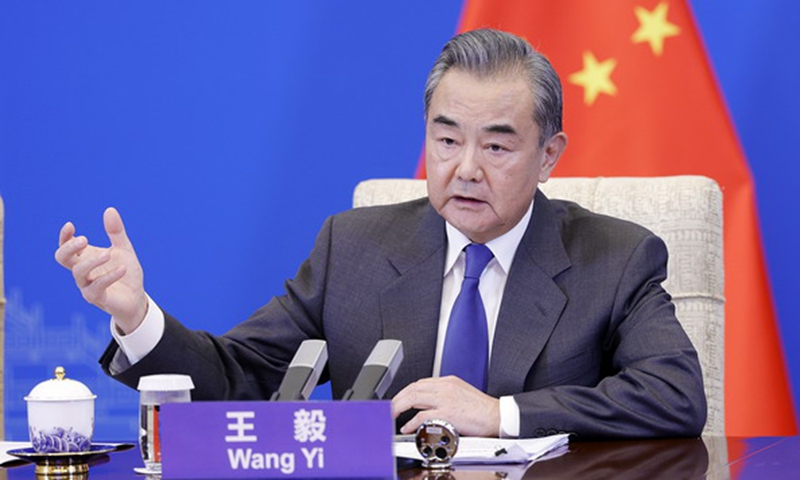
Former foreign minister, Wang Yi, who serves currently as the director of the Office of the Foreign Affairs Commission of the CPC Central Committee (this position according to the Chinese political hierarchy is higher than the position of the minister of foreign affairs) went on a foreign trip to European countries, trying to highlight China’s mediating role in the Russian-Ukrainian conflict as well as to convey China’s foreign policy priorities after the 20th Communist Party Congress. During his trip Wang Yi visited France, Italy, Hungary, took part in the Munich Security Conference and traveled to Moscow, where his European tour will end on February 22.
Wang Yi’s speech at the Munich Security Conference drew particular attention. As is known, China has repeatedly pointed out that Russia was provoked into taking action in Ukraine by NATO’s eastward expansion. Moreover, in official rhetoric, as well as in official documents, Chinese officials and diplomats prefer to use the language as the “Ukrainian crisis” or “conflict” refraining from using terms such as the invasion or the Russian-Ukrainian war.
In his speech in Munich, addressed primarily to a Western audience, Wang Yi used a very specific language that, on the one hand, lays the blame for the escalation of the Ukrainian crisis on unspecified external forces, and on the other hand, glorifies the mediation mission of China. He also announced that China plans to offer its peace plan to end the conflict on the first anniversary of the start of the Russian military operation. What the proposal will look like can be guessed based on the main points that Wang Yi made in his speech at the Munich Security Conference.
“China is not a party to the Ukrainian crisis, but we did not stand idly by, did not add fuel to the fire, and even opposed taking advantage of it.” (Wang Yi)
Mr. Wang said that the war in Ukraine “must not continue,” and “some forces might not want to see peace talks to materialize” and “might have strategic goals larger than Ukraine itself. They don’t care about the life and death of the Ukrainian people, nor do they care about the damage to Europe, but have greater strategic goals.” This wording almost coincides with the narrative used by Moscow, which claims that Russia is committed to peace talks, but the opposing side is not ready to negotiate.
Subscribe to get access
Read more of this content when you subscribe today.
Wang Yi specifically addressed the European public, urging them to get out of the pressure of external forces and stop sacrificing themselves for the interests of others in Ukraine. “We need to think calmly, especially our friends in Europe, about what efforts should be made to stop the warfare; what framework should there be to bring lasting peace to Europe; what role should Europe play to manifest its strategic autonomy”.
Mr. Wang also stressed that “nuclear wars must not be fought,” sending clear signal to Moscow that Beijing will definitely not tolerate the use of nuclear weapons in this war. While this is a very strong message from China, it certainly narrows the window of opportunity for Russian officials to use nuclear threats in their public announcements.
While Beijing has repeatedly voiced Moscow’s narrative about Russia’s motives for going to war—one of the most frequently used was NATO expansion—Chinese officials take every public opportunity to emphasize that China is opposed to war and that it supports the UN Charter core principle of territorial integrity (领土完整). It is clear that China considers itself a world power that has the right to formulate its position on any international issue. Therefore, it would be naive if Wang Yi called for the complete withdrawal of the Russian army from Ukraine, but his reference to the principle of territorial integrity at the Munich Security Conference may suggest that the upcoming peace plan may somehow reflect this point, e.g. that Russia will retreat to positions before the invasion.
On the other hand, it is not Russia but the United States that is important to Beijing, both in a possible confrontation over the Taiwan issue and in global competition. China is playing the long game and is very careful about making hasty decisions. Speaking about the role of China in the Ukrainian conflict, the United States made it clear to Beijing about the consequences in the event of the supply of lethal weapons to Russia.
Taking into account the clear position of the United States, as well as the сomitments arising from the strategic partnership with Russia, China’s most rational role in the current situation is becoming the ultimate mediator, capable of bringing the war to a conclusion. If China manages to carry out its peace plan, this, on the one hand, will help to save Putin’s face (面子) in his unsuccessful blitzkrieg, and on the other hand, will give Kiev guarantees that Moscow will withdraw its army to the borders before the invasion. There are a lot of unknowns in such a scenario, but the most important thing will be the willingness of both sides to make concessions and adhere to realism. More importantly, the new plan must take into account the fact that the international guarantees of the territorial integrity of Ukraine, made in the Budapest Memorandum (1992), did not prevent the current war and the loss of Ukrainian territory.
 Global News Insider