
Author: Marián Šeliga
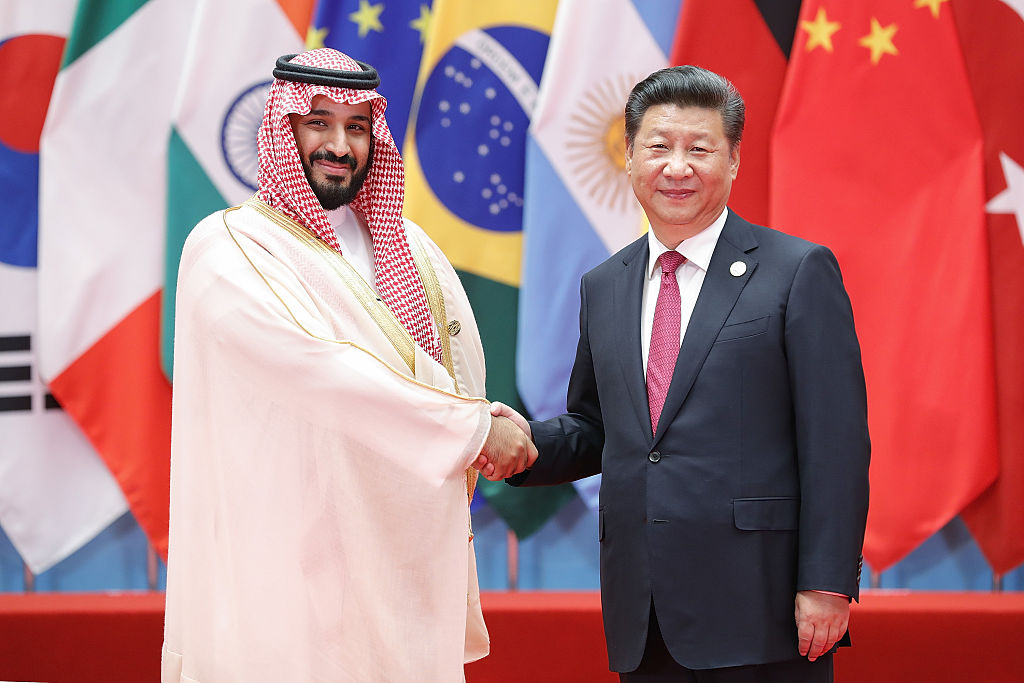
Saudi Arabia is the largest exporter of oil to China and China is the largest trade partner of Saudi Arabia. The visit of Xi Jinping to Saudi Arabia comes two months after Riyadh angered USA by advocating big oil-production cut within OPEC+ organization.
The Chinese president’s three-day state visit to Saudi Arabia in December 2022, as well as his meetings with Arab leaders during the first China-Arab Summit and the first China-Gulf Cooperation Council (GCC) summit, were widely discussed in the media. The exclusivity of this event was emphasized by the fact that this was the first official foreign visit of Xi Jinping after his re-election as general secretary of CCP for a third term in October this year.
The visit is seen by some analysts as an attempt by China to boost relations with the countries of the region, which Washington considers its territory of influence. At the same time, Saudi Arabia itself is still perceived as one of Washington’s crucial allies in the Middle East region. The US is providing the Saudis with advanced cutting-edge technologies, weapons, and massive investments in its petrochemical industry. On the other hand, Saudi Arabia has been China’s most important crude oil supplier for many years, and China is considered the latter’s biggest trading partner.
In this respect the latest visit of Xi Jinping shall be seen through the lens of promoting the already existing Sino-Saudi relations, but not as a new alliance being formed against the USA. Saudi Arabia under the rule of Crown Prince Mohammed bin Salman has resisted any attempts to demonstrate affinity to either side of the rivalry between the U.S. and China or USA and Russia. But this does not prevent the countries of the region, including Saudi Arabia or UAE from developing pragmatic cooperation with China or even globally ostracised Russia.
China is top customer of Saudi Arabia making their relationship key to the crude oil market
Although Saudi Arabia would definitely not try to undermine its relations with Washington by tik-toing with Beijing, China will definitely use any opportunity to bolster business and economic activities especially with countries which China considers as reliable partners. Nevertheless, compared to the countries of the Global South, especially the poor African or Latin American countries, deprived of capital, and therefore open for any investment from abroad, Saudi Arabia itself is a wealthy country with huge incomes coming from the oil and petrochemical industries. This means that when investing in Saudi Arabia, Chinese investors, as well as banks, have less leverage over this country in terms of obtaining additional preferences or concessions.
Investment rally
During the visit of the Chinese President to the kingdom, Chinese and Saudi companies signed in total 34 investment agreements covering green hydrogen and solar energy, information technology, cloud services, transport, construction and other sectors. The Saudi state news agency did not provide any detailed valuation of the deals signed, but had earlier indicated that the two countries would seal contracts worth $30 billion.
Saudi Arabia under the rule of king Salmon is trying not only to develop an economy supporting the alternative to oil industries, but it also carries out a truly diversified multifaceted foreign policy, but definitely not creating coalitions. For Saudi Arabia’s Crown Prince Mohammed bin Salman, the visit of the Chinese President is an opportunity to once more highlight Saudi Arabia as a regional power which plays a rising role in world affairs. This status was underlined also by the diplomatic ambition of Saudi Arabia and the United Arab Emirates which mediated prisoner swap between the U.S. and Russia.
Multilateralism at its best at the first China-Arab States Summit
During the visit President Xi Jinping attended the first China-Arab States Summit which invited leaders from 21 countries of the Arab League, including among others Crown Prince and Prime Minister Mohammed bin Salman Al Saud of Saudi Arabia, President Abdel Fattah Al-Sisi of Egypt or King Abdullah II bin Al-Hussein of Jordan. This new model of cooperation with Arab countries very much resembles in format the already existing China 16+1 Initiative which has been used as a platform for cooperation with 16 countries in Eastern and Central Europe.
Subscribe and receive a weekly in-depth analysis on top international issues.
In his keynote speech delivered at the Summit Xi Jinping underscored that China will support Arab states in independently exploring development paths suited to their national conditions. Xi pointed out that China as well as Arab states shall jointly uphold the principle of non-interference in other countries’ internal affairs and practice true multilateralism. The latter is becoming a very fancy term regularly being mentioned in the meetings between Xi and his counterpartners from Third world countries or the Global South.
At the Summit, China and Arab states agreed to build a China-Arab community with a shared future in the new era. Both parties proposed eight major cooperation initiatives in areas spanning from food security to green technologies and innovations. Some sources believe that this meeting would spearhead the active development of Gulf-China ties and lead to a possible free trade agreement.
Oil deals in Yuan
Speaking at the China-Gulf Cooperation Council (GCC) Summit in Saudi Arabia’s capital Riyadh, President Xi Jinping also noted that China would work with Gulf nations to initiate yuan settlements of oil and gas trades in the next three to five years. As the Gulf states rely on China as a top buyer of their oil exports this may be another attempt of Beijing to internationalize its currency. The Chinese currency is increasingly being used to settle trade with Russia. The latter has tried to find alternative currencies to serve its trade ties after the sanctions cut Russia off the global financial system.
 Global News Insider