
Author: Marián Šeliga
If Xi Jinping is re-elected for a third term, it is highly likely that the EU and the US will intensify the policy of economic and technological decoupling from China.
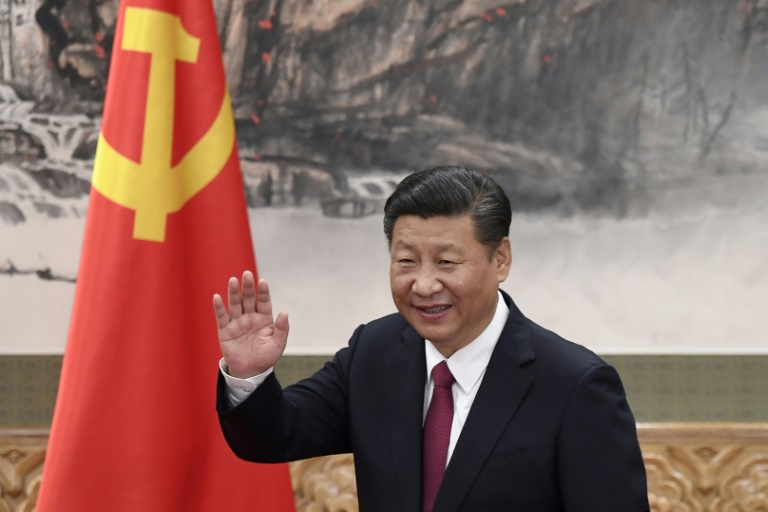
Xi Jinping is expected to be granted a third term as general secretary of the Communist party at the upcoming 20th CCP Congress, making him the first person since Mao Zedong to rule the country for more than two consecutive terms. This event will also symbolically shatter the system of party rules and norms put in place by Deng Xiaoping that have long prevented party leaders from consolidating their positions in power. Such a system of rules proved its effectiveness for decades, as it allowed China’s political system to avoid the ossification of the party line, which was especially important at a time of great trials for the country. But China’s political system is constantly evolving, and any limits on power can simply be ignored especially when a country’s president has crippled rival factions and shored up power far beyond his predecessors. This was perfectly demonstrated when China adopted a special amendment to the CPC Constitution, citing “Xi Jinping’s Thoughts on Socialism with Chinese Characteristics for a New Era.”
Although there is no doubt that Xi will be re-appointed as Head of CPC and and Party Military Commission at the meeting, due to the opacity of the political system, no one knows exactly who will become the new 7 members of the CPC Politburo Standing Committee (PBSC), which is considered the highest authority in China. At the same time, the biographies of the new appointees and the presence or absence of their close ties with Xi Jinping will tell us a lot about the future political and economic development of China.
By imprisoning a number of senior security officials for alleged corruption ahead of the October Party Congress, virtually echoing the scenario of high-ranking CCP members being expelled on the eve of the 19th Congress in 2017, Xi is sending a clear message to the public, as well as to opposition factions, that he is consolidating power and will continue to do so by installing his allies into the PBSC. In this context, one of the most important intrigues that attracts the attention of foreign investors and representatives of the business sector is the appointment of a new prime minister. It is very likely that the “economic liberal” Li Keqiang will be replaced by a left-wing candidate who will continue Xi Jinping’s course of tightening control over large private technology companies like Alibaba or Tencent as well as supporting indebted SEO companies.
Moreover, to further convince domestic audience that he firmly holds the reins of foreign policy in his hands, Xi also attended the Samarkand SCO summit in September as part of his first foreign visit since the outbreak of the global coronavirus pandemic, demonstrating his willingness to strengthen relations with Eurasian partners and promoting China’s interests in Central Asia.
China faces domestic challenges and external pressure from EU and US
Amid mounting problems in China’s overextended real estate sector and social unrests sparked by notoriously tight restrictions under the so-called ZERO Covid policy imposed on the lives of ordinary citizens, the Chinese economy is going through turbulent times. While China was able to outperform virtually every major economy in 2020 and 2021, when most developed and developing countries struggled hard through the pandemic crisis, it will almost certainly fall short of its economic growth rates projected for this year. There are other domestic issues, such as an ageing population, the middle income trap, and largely unresolved environmental issues, that are obviously having a negative impact on the Chinese economy. This bunch of problems is something Xi will have to deal with during his next term in power.
But apart from the problems with large developers’ debts or the recent crackdown on the technology sector in China, which are a by-product of the economic policies of the CCP under Xi Jinping, a couple of new external challenges are on the horizon. Being very frustrated with the state of human rights and democracy in China, as well as with the current over reliance and dependencies on the Chinese supply chains, USA and the EU are increasingly calling for decoupling from China.
It started with Donald Trump’s trade war against Beijing and continued under Biden who is stepping up its policy of disintegration from China by supporting domestic production and limiting the export of key technologies to Beijing including most advanced chips. Moreover, as N. Pelosi’s recent visit to Taipei showed the United States is more persistently supporting Taiwan which poses a direct challenge to the CCP prestige.
While decoupling from China gets bipartisanship support in the USA, the situation with European policy towards Beijing remains very controversial. EU top officials are calling for a more assertive stance on human rights issues in China, as well as for lowering down the dependence on the Chinese market, but at the same time French and German leaders are planning a visit to China soon. The most striking example of this dichotomy in relation to the PRC at the state level is the example of Berlin. Germany, with a trade volume of 246.1 billion euros with China, enjoys the status of China’s main trading partner in the European Union. While Foreign Minister Annalena Baerbock is calling for more restrictive measures on doing business with China, German Prime Minister Olaf Scholz appears to be more pragmatic and actively supports German business groups in advancing their goals in China. This dichotomy in European politics may prevail in the coming months, if not years, but much of the future of European policy towards China will depend on the political and economic development of China itself. Much will be clearer after Xi’s report ccp and the new Central Committee is formed.
 Global News Insider
One response to “Xi’s reelection: implications for China and the world”
[…] days, much attention has been paid to China’s main political event – the 20th Congress of the Communist Party, which re-elected Xi Jinping as head of the CPC for another five-year term. Xi cemented his power […]