
Author: Prof. Duncan McCampbell
The visit to Taiwan by U.S. House Speaker Nancy Pelosi angered Beijing and led to a series of aggressive Chinese military manoeuvres that have people talking again about war. Less discussed is how Pelosi’s visit exposed an insoluble problem for Xi Jinping.
Xi places “re-uniting” Taiwan with the Mainland as his top priority—as indeed he must. Like all leaders throughout Chinese history, Xi is subject to what I call China’s Iron Rules. The first and most important of these rules require a Chinese leader to defend, reclaim or expand China’s territory at any cost, or be considered a failure. Powerful thought he clearly is, Xi can’t ignore his greatest, most sacred duty to China (领土完整神圣不可侵犯).
Xi has more practical reasons to own and control Taiwan. A prosperous, democratic and politically pluralist Taiwan treads on Beijing’s claim of systemic superiority and inevitable unity. Taiwan’s government was for decades, like the Mainland, a one-party dictatorship. But the fact that Taiwanese democracy evolved peacefully from autocracy is a big political problem for Beijing.
Xi has convinced the Chinese people that unity with Taiwan is inevitable and, if necessary, achievable by force. China’s aggressive behavior under Xi, together with its broken promises on Hong Kong, have closed the door to any peaceful, non-coercive avenues to unity. All that remains is force, and thus we arrive at Xi’s dilemma—one of his own making.
He doesn’t have a realistic military alternative.
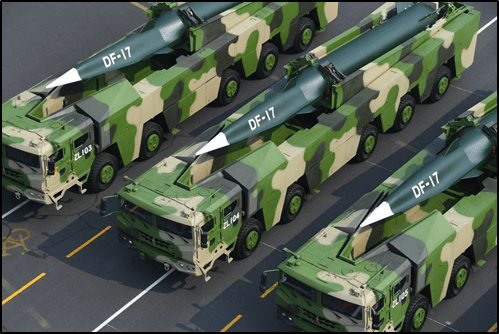
I was in Beijing on October 2, 2019, the day after the largest military parade in Chinese history marked the 70th anniversary of the founding of the PRC. For three solid days every television channel in China carried wall-to-wall coverage of Xi and his marching soldiers, roaring jet fighters, tanks, ships and missiles.
Xi has convinced the Chinese people that China’s world-class military can push the United States out of China’s backyard. This is why, when Pelosi’s plane landed safely in Taipei, Chinese cyberspace erupted, first with disbelief, then with anger, then was silenced by censorship. Why, people demanded, didn’t the mighty PLAAF shoot her plane out of the sky, or at least force it to turn around and land somewhere else?
The reason is simple. China’s military is nowhere near ready to directly confront the U.S., and much less, to take Taiwan by force.
Defense experts say that from one to two million troops would be needed to successfully assault Taiwan. It would be, they say, the most complex military operation in history—far eclipsing the allied invasion of Normandy in World War II in size, scope and risk.
Subscribe and receive a weekly in-depth analysis on top international issues.
Yet some Western analysts continue to believe, based solely on the size of China’s military, that such an attack might succeed. How, I must ask, could China hope to conduct “the most complex military operation in history” when:
- Never in its history has it conducted a contested amphibious assault of any type;
- Never in its history has a combat sortie flown from either of its two, quite ordinary aircraft carriers;
- Never in its history has a Chinese pilot shot down an enemy aircraft while operating a Chinese-made fighter;
- It has never fired one of its fearsome-looking anti-ship missiles at an enemy ship–much less sunk one;
- No submarine in Chinese history has been credited with sinking an enemy ship or another submarine; and, crucially
- No officer in China’s enormous military has ever commanded land, naval or air forces against an enemy in a real shooting war.
When your country’s military, and especially its navy, is so young that it has not fired a single shot in a modern war, you have only one way to prepare for war: you learn from others. The Chinese gleaned a key lesson from the 1982 Falklands War, in which a third-rate military power—Argentina—sank the British destroyer HMS Sheffield with a single French-made Exocet missile.
From the moment the “Shiny Shef” came to rest at the bottom of the south Atlantic, surface naval combat changed forever. The focus became missiles and surviving missile attacks. But while missiles have added game-changing accuracy and lethality to surface naval combat, anti-missile defenses have not kept pace. Surface combatants have not been this unprepared for new anti-ship weapons since the HMS Prince of Wales and Repulse were sunk by Japanese aircraft early in World War II.
China learned from the Sheffield and developed a formidable suite of hypersonic “carrier killer” missiles to counter the USN’s powerful Nimitz and Ford Class nuclear aircraft carriers. But there is a flip-side to the anti-ship missile story—and it doesn’t favor China.
The enormous flotilla needed to ferry 1-2 million Chinese invaders across the Taiwan Strait would be easy meat for missiles fired from submerged and largely invulnerable U.S., Japanese, Australian and UK submarines—to say nothing of land-based missiles fired from protected revetments on Taiwan and Okinawa. There is only one way to describe the likely outcome: a blood bath.
Here is the key point: missile technology, as we have learned with HIMARS and the sinking of the Russian flagship Moskva in the Ukraine/Russia war, has decisively shifted the calculus of war to the defender, making a successful Chinese amphibious invasion of Taiwan a military impossibility.
Fortunately, other events will intervene long before Xi’s invasion forces weigh anchor.
China has two profound and permanent strategic vulnerabilities. Its relatively short coastline is shallow, contested, and easily blockaded. Second, China is energy-poor. Through those contested waters must pass tankers carrying some 70% of China’s energy from Africa and the Gulf.
Once it became clear that China was preparing for war—the preparations would take months and be obvious–allied navies would interdict all China-bound tankers at the western entrance to the Malacca Straits. If that proved insufficient, they would then blockade all maritime transit in/out of the South China Sea at a few key chokepoints. China would, of course, try to break the blockades, but in doing so would disperse its forces at a time when force concentration—to take Taiwan–was absolutely necessary. Game over.
Advances in military technology, together with the alliances that China’s own aggressive behavior have brought about, means that there is truly no realistic military solution to Xi’s Taiwan dilemma. Let’s all hope he is receiving better advice than Putin did.
This article is excerpted from Prof. McCampbell’s soon to publish book, Sunset Over China.

 Global News Insider