
Photo by: cepconsult.com
Author: Jozef Hrabina, Chief analyst at the Council of Slovak Exporters
Once the Tatra Tiger is now stuck in between the triangle of reliance on foreign companies, the war in Ukraine and the wish to reboot its economy.
Poland and Slovakia champion the help to Ukraine. Since the war in Ukraine started, Slovakia has become one of the most stalwart supporters of its Eastern neighbour. Poland is leading the chart in terms of value to GDP ratio, and Slovakia is the fourth largest supporter of Ukraine. As for aid to refugees, Slovakia and Poland again lead the charts as there are 45 refugees on 1000 Polish citizens. Slovakia is third with 38 refugees on 1000 citizens (second place belongs to Moldova with 41 refugees on 1000 citizens).
Yet Slovakia belongs to the poorest countries in the Eurozone, and showing signs of an economic slowdown of a structural nature, Slovakia did not hesitate when it came down to helping a neighbour in grave danger.
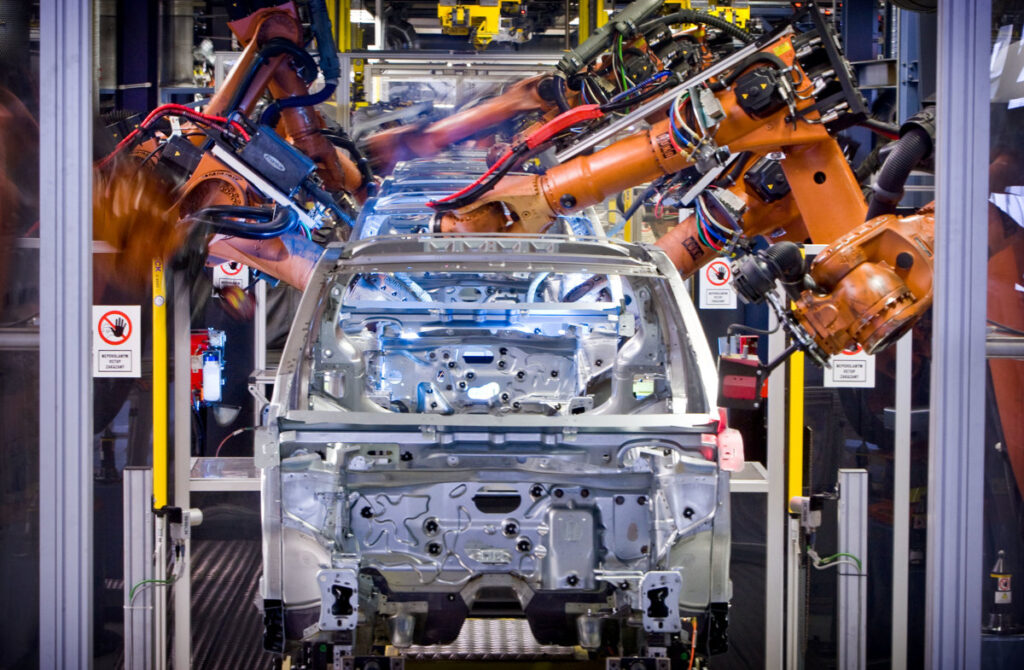
Once a tiger, a manufacturer for automotive now
The average wage in Slovakia represents a little over thousand euros, which is the fourth-lowest average monthly salary amongst the EU27 member states. Slovakia, making its name in the early 00s´ as Tatra Tiger for its robust economic growth, now faces the consequences of wasted opportunity that opened the country to the world on the verge of millennia.
Transnational corporations such as Volkswagen, KIA, Stellantis, Jaguar Land Rover, U.S. Steel, Samsung, or Ikea found themselves comfortable in a country with qualified and cheap work labour, a heritage from the socialist era, tax eases and forthcoming governments willing to make amends to investments that would bring a lot of capital to the country.
Alas, this is where the story of robust growth ends. Slovakia became over-reliant on export since 87,5 % of its exports flow to the EU markets, with 22 % bound just for Germany. Today, Slovakia exports in value approximately 90 % of its GDP with very little added value as it has become just a part of global supply chains.
Yet few champions of Slovak industry remain amongst the top ten Slovak exporters, such as the metallurgical operation in Železiarne Podbrezová, heavy industry in Tatravagónka Poprad, automotive in Matador Group, and fertilisers production in Duslo Šaľa. Amongst new faces in the Slovak industry, the globally known IT company ESET sets an example for the rest, also the rapidly growing metallurgy at Heneken Group is worth mentioning with green technologies and various innovations implemented into their production sites.
Apart from ESET, all the abovementioned businesses share a common fear caused by the Russian war in Ukraine- spiking energy prices. Slovakia is one of the most dependent countries on Russian oil with 100 % dependence and gas with 85 % of Russian gas share on the Slovak market.
With growing commodities prices, some of the Slovak energy-reliant companies were forced to shut down their production. Whereas high prices of primary inputs influence the price of the final product and thereby, the competitiveness of Slovak exports suffers.
With the expected cut-off from Russian energies, the Slovak ministry of economy is trying to secure supplies of gas, but the lack of connection to LNG terminals, which are also scarce for the Central and Eastern Europe, at this moment, the industry alone in Slovakia consumes approximately 2,2 billion cubic metres of gas a year. It is hard to say whether the Slovak industry would survive over the long term without stable prices of energy and competitive products. However, one might say with confidence that the good part of the Slovak faith is going to be decided out of Slovakia either on the level of the managerial steering of multinational corporations or the other states with higher consumption of gas that lie along the pipelines from Russia crossing through Slovakia.
How to avoid being a black passenger
Slovakia is now a passenger that sits on the wagon led by others, although there are few sober realisations that the current Slovak government did over the past few years. Stressing the importance of innovations as one of the core selling points in the international markets, the Slovak Ministry of Economy initiated a hydrogen strategy that is supposed to make Slovakia a hydrogen powerhouse.
These efforts were reflected in a prototype of a hydrogen supersport car manufactured by Matador and Technical University in Košice and introduced at the Dubai Expo.
Wish to innovate and sell tangible export products drives other areas such as the batteries industry, medical supplies, or IT solutions. These pioneers of innovations are also pioneers of qualitative change that could make Slovakia the Tatra Tiger again, a country that is a good neighbour and the innovation hub in the heart of Europe.
 Global News Insider