
Photo by: Reuters
Author: Marián Šeliga
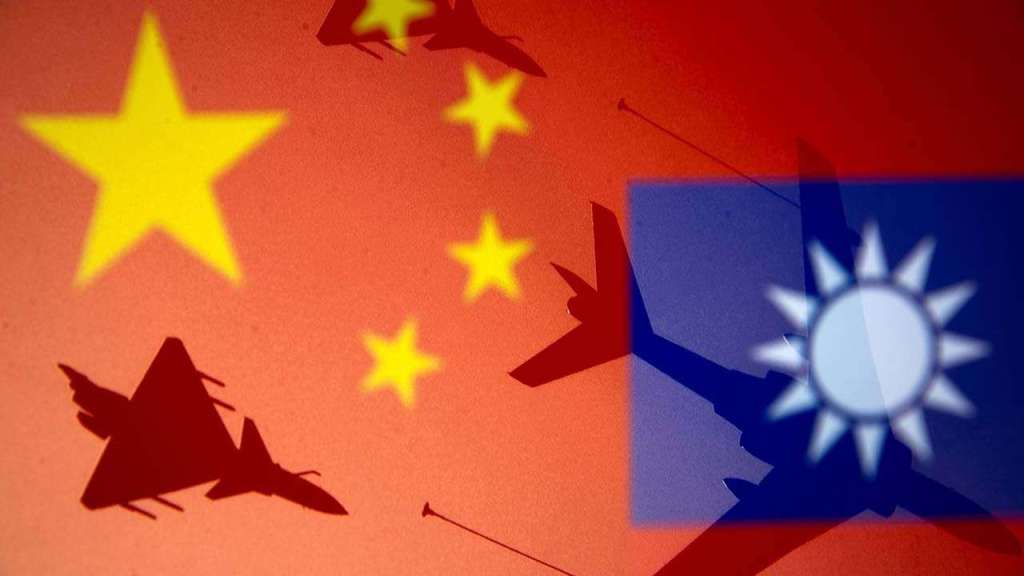
A widely accepted narrative among Western analysts and experts implies that China is extremely cautious when dealing with the issue of providing help to Moscow after the Russian invasion of Ukraine. According to these experts China is fully aware of possible secondary sanctions from the United States and Western countries and therefore it will not circumvent the sanctions regime imposed on Russia. The Chinese President has even recently asked his advisers to find ways to help Russia financially but without violating sanctions. While generally true and logical, this narrative only works with the most obvious facts that lie on the surface, neglecting the more important long-term interests of Beijing. China views the recent war in Ukraine through the prism of its possible future unification with Taiwan, so the leadership in Beijing is closely monitoring the experience of Russia, which is facing increasing pressure from the sanctions regime. The success or failure of Moscow’s unprecedented attempt to redraw the global architecture of international relations established after the collapse of the USSR has serious implications for Beijing’s policy towards its “breakaway province”.
Beijing learns the negative experience of Russia
If Beijing decides to go to war against Taiwan, it could face Western financial sanctions including freezing of its foreign exchange reserves as was the case with Russia. That is to say China would automatically lose an effective tool in its monetary policy. Chinese yuan is not a free market traded currency and its rate is kept fixed by the People’s bank of China. China’s central bank (People’s bank of China) adopted a modified version of a fixed exchange rate that differs from the floating exchange rate used by many countries. The People’s bank of China keeps yuan’s value fixed within a 2% range against that currency basket. Large revenues in US dollars coming from export to the USA allow Beijing to effectively intervene in the market in case of necessity.
PBOC (People’s bank of China) uses USD dollars cash reserves to buy U.S. Treasuries, which are safe-haven assets providing some incremental return over cash.
But a freeze on China’s foreign exchange reserves could become a double-edged sword for the US, as China holds a significant amount of US Treasuries. The subsequent sell-off of US debt could trigger an unprecedented financial crisis in the US as well as in other countries. As we found out lately, after personal sanctions were imposed against Russian oligarchs, including the freezing of their foreign assets ranging from real estates to yachts, there has begun a broad discussion between Chinese and Hong Kong tycoons about what could happen to them if Beijing decides to invade Taiwan. This discussion includes specific examples of the freezing of Russian assets abroad, as well as personal sanctions against high-profile individuals. Some Chinese magnates have already disposed of their lucrative holdings in Europe, such as Li Kia-shing, who sold his empire in England. Another headache for Beijing could be China’s overdependence on foreign chips, especially from Taiwan, South Korea, and even the US, or dependence on oil and natural gas supplies, mostly imported through the Straits of Malacca. Most of European trade with China and Japan is shipped through the Straits of Malacca which reveals another strategic insecurity for China. In the event of invasion of Taiwan the Straits could be blocked by the US Navy and their allies.
Russia’s negative experience with unprecedented Western sanctions, which have effectively removed Russia from financial, economic and energy cooperation with Western countries and exposed Russia’s over-reliance on imported technology, chips and spare parts, sends a clear signal to Beijing that a military solution to protect national interests, may produce a devastating blow to its economy.
Policy of strategic ambiguity on Taiwan after the Ukrainian case
As it has been many times discussed in the expert community, the USA has adopted a strategic ambiguity approach to the Taiwan issue. This means that Washington does not explicitly state that it will send its troops to fight China in the event of an invasion of Taiwan. Such an approach, on the one hand, kept Beijing from rash steps for decades, and on the other hand, prevented the excessive activity of the Taiwanese rulers striving for independence. The US State secretary Blinken has emphasized recently that “USA will oppose any unilateral changes to the status quo from either side and calls both sides to resolve cross strait differences by peaceful means“.
But after the Russian invasion of Ukraine, such an ambiguous approach may become somehow ineffective. Many experts tend to ignore the fact that Taiwan is not an internationally recognized state (neither the US nor the EU countries have diplomatic relations with Taiwan). Unlike the internationally recognized sovereignty of Ukraine, in the event of an invasion of Taiwan, it can be difficult to put into practice concepts such as internationally recognized territorial sovereignty of Taiwan.
The lockdown in China’s financial centre Shanghai, as well as lighter lockdowns and restrictions on transport in other Chinese cities, have already caused significant hardship for China’s economy. Chinese rulers have prioritised security and control of the COVID pandemic over economic growth this year. While the situation is still very blurred, the economy and its citizens, especially SMEs, are facing unprecedented existential challenges. The problems of the real estate sector (which began with the bankruptcy of Evergrande) are somehow under control, but the problem of the indebted real estate sector has not yet been solved.
We believe that Xi Jinping will not unleash military operations on Taiwan this year, as the important 20th party meeting will take place in October. But in a situation of ever decreasing GDP and growing social tensions, such a scenario shall not be absolutely excluded in the future, especially if Xi will stay in power for another term. China with its hundreds of think tanks is carefully monitoring the situation with war on Ukraine. The latter leads to the exhaustion of Russia as well as growing inflationary and immigration pressure on European countries and food shortages in Africa and Middle East.
Is China more relevant than Russia?
Although the conflict in Ukraine is high on the agenda in Europe, the most important geopolitical competition of this century might take place in the Indo-Pacific region with China trying to challenge the USA. US policy makers might have a rational reason to believe that Russia is weaker than they had anticipated before the invasion into Ukraine, assuming that Kyiv would be taken by Russian troops within 72 hours. The failure of Blitzkrieg as well as a decision of previously neutral Sweden and Finland to join NATO amid unprecedented unity among EU countries in their condemnation of Russia’s aggression and support for Ukraine have paved the way for US to regain its superpower status on the global scene and to fully concentrate on China as a strategic competitor. According to the chairman of Shanghai Public Policy Research Association, Hu Wei, the US and Europe would form a closer community of shared future, and American leadership in the Western world will rebound. Hu Wei points out that the primary goal of the U.S. is to contain China from becoming the dominant power in the Indo-Pacific region.
Since the end of World War II, the United States has struggled to prevent the dominance of any one power on the European continent, so the recent unification of European allies against Russian aggression is a positive signal for the United States that European countries are ready to resolve their security issues without direct US military involvement. In this situation, the Chinese leadership must be aware of the fact that the timing for invading Taiwan in the coming months is not favorable. Western countries will react harshly to any attempt by China to change the territorial status of Taiwan. In this regard, Beijing must also take into account the possible economic damage that may be caused by the imposed sanctions. Russia’s “bitter experience” with sanctions could be a “useful” lesson for Beijing.
 Global News Insider