
Recently, there is a lot of discussion about the term “(first) world economic war” in the system of international relations. This term mainly defines the unprecedented economic and financial sanctions that the United States and Western countries have imposed and continue to impose on Russia. Although sanctions in the hands of the United States and its Western partners are not a new tool to cope with “troublemakers” from many regions of the world (such as the Middle East, Africa, Asia, Latin America and even Europe), the unprecedented sanctions attack on Russia together with two years of Coronavirus crisis have hardened the consensus on the need for both economic decoupling and deglobalisation.
Under these conditions, it is logical that there will emerge other world centers of power that will be able to offer alternative ways of conducting international trade and alternative economic markets to all those countries and individual enterprises that are under Western sanctions. In this case, the “alternative” is a win-win deal. China can certainly become such a center of power.
Let’s take a look at several examples of China’s ability to replace the positions of the US and Europe in the markets subjected to sanctions.
Banking and financial sector
The blocking of transactions in US dollars and euros provokes the process of de-dollarization, the refusal of countries dissatisfied with US policy to use the dollar in their foreign exchange transactions, and at the same time accelerates the implementation of China’s tasks to turn the yuan into an international currency. There is already an increase in the share of the yuan in the national gold and foreign exchange reserves of some countries as part of the diversification of the “currency basket”.
Here is a recent example. Israel’s central bank has made the biggest change to its reserve allocation in more than a decade, adding the Chinese yuan to its $206 billion reserves, as well as Canadian and Australian dollars. The share of the yuan for this year is set at 2%. At the same time, the share of the euro will fall from 30% to 20% – the lowest level in a decade. The dollar will account for 61% against 66.5% previously.
In the medium term the yuan may become a contender for the role of a rival to the dollar as the world’s reserve currency.
The yuan has all the prerequisites for this:
– the yuan is on the 3rd place among the main international payment currencies after the dollar and euro;
– the share of the yuan in global gold and foreign exchange reserves at the beginning of this year is 2.7%. This indicator may increase against the background of the blocking of Russia’s reserves, as well as the expected increase in settlements in yuan between Saudi Arabia and China;
– in 2020, globally China ranked 1st in total exports and 2nd in imports.
[Key world currencies are increasingly acting as an instrument of sanctions restrictions, which increases the risks of their use. Against this background, the yuan attracts investors’ interest as a way to increase currency diversification.]
China takes a leading position in issuing its own “central bank digital currency” (CBDC) – the so-called “digital yuan” or e-CNY. One of the goals of e-CNY implementation is the internationalisation of the yuan, convenience and speed of its cross-border turnover.
Transactions using cyber yuan can be carried out without the Internet, and you will not need a bank account to access your savings. According to the World Bank, about 1.7 billion people on our planet live without a bank account. The digital yuan might become an independent alternative to the SWIFT international interbank system, which the US and European countries use as a tool to put pressure on opponents in conflict situations. Cyberyuan will help avoid US restrictions not only on China, but also on Russia, Iran and other countries that can make transfers without attracting the attention of the US government. The introduction of national digital currencies will allow cross-border transfers without the participation of SWIFT.
Blocking access to the international system of interbank messages SWIFT makes it possible to make the Chinese platform for interbank transfers CIPS (Cross-Border International Payments System) more acceptable at the international level. Or even create another multilateral interbank system, an alternative to SWIFT.
The system of cross-border interbank payments CIPS was launched in 2015. This payment system offers its members clearing and settlement services for international payments and trading in RMB. CIPS is figuratively referred to as the “highway for the internationalisation of the yuan”, since one of the main goals of the system is to increase the efficiency of global transactions in yuan.
[Internationalisation of the yuan is China’s long-term strategy.]
CIPS processed around 80 trillion yuan ($12.68 trillion) in 2021, a 75% increase from a year ago. CIPS said about 1,280 financial institutions in 103 countries and regions have connected to the system.
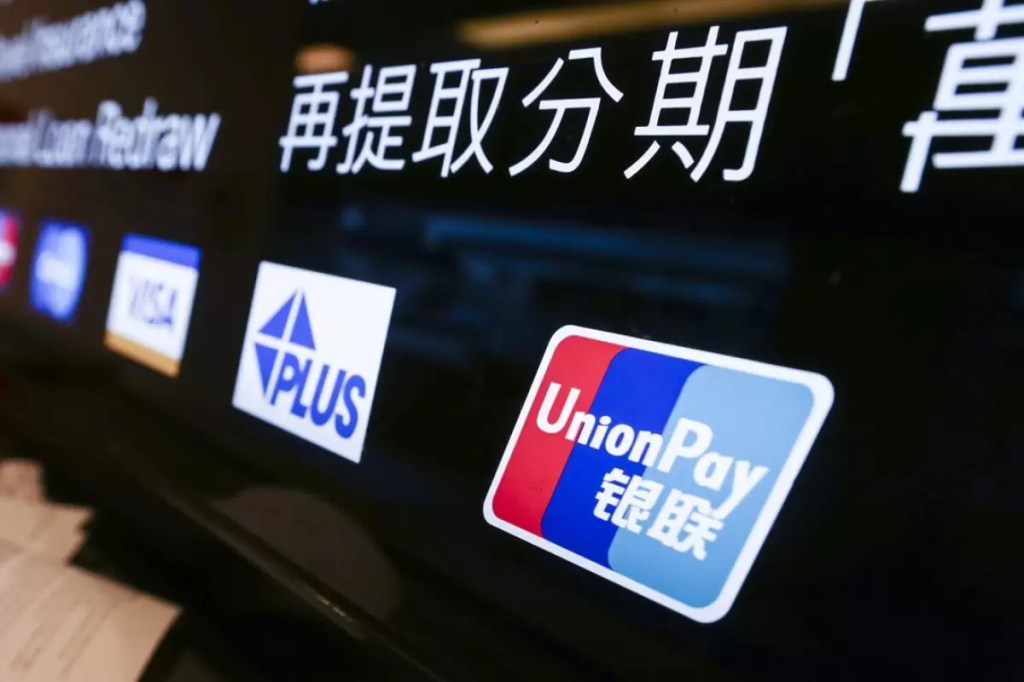
Another sanctions tool is the termination of the ability to use the world’s main payment systems VISA and MasterCard, which leads to the loss of the ability to perform cross-border transactions and any operations outside the country, starting from cash withdrawals to transfers and payments in stores and online. As an alternative to most accepted card payment systems, only the Chinese UnionPay, or rather its international branch, UnionPay International (UPI), remains.
As with many other issues involved China has so far been wary of acting openly in defiance of Western sanctions. For example, sanctioned Russian banks will not yet be able to issue UnionPay cards, as the Chinese payment system is afraid to cooperate with them because of the risk of secondary sanctions.
As stated, the UnionPay card can be used to pay and receive cash in 180 countries. Largely due to the huge domestic market of China, today UnionPay is the largest card payment system in the world in terms of key indicators – the number of cards issued (since 2010) and transaction volumes (since 2015).
Raw material cooperation
China is a global giant in terms of consumption of oil, gas, coal, it is one of the largest markets for mineral resources. China’s main import is crude oil. In theory, China is ready to take over the supplies of the resources released from the western direction, of course, at a favourable price for itself. With the supply of this type of goods, there is both complexity and hidden potential: an appropriate infrastructure is required. It is necessary to build new pipelines and seaports, and expand the railway network. On the one hand, it takes time. On the other hand, it expands the opportunities for investment activities.
Industrial, technological and agricultural products
China is ready to offer its machinery, equipment and mechanical engineering products to the whole world. In the issue of the departure of Western telecommunications companies, Chinese corporations are already ready to occupy the vacant niche, first of all, this concerns Huawei and ZTE, which are currently under US sanctions, as well as Xiaomi, BBK and others. After all, China’s main exports are: network equipment and computers (8.4% and 5.9% respectively). The market of commercial and personal cars, as well as spare parts, is ready to be mastered by Chinese auto giants. The same applies to all other areas of industrial and household equipment. And here we can talk not only about supplies, but also about deeper cooperation – localization of production.
China is a major player in the global agricultural and farmer market, both in terms of imports of products and in terms of exports to other countries. China is a global giant in the supply of various polymer and textile products.
Pragmatic China
China will not risk its interests where it is not profitable for it. China is still closely tied to the US markets. However, we must not forget that the US-China trade war unleashed by President Donald Trump is still relevant, and there are already a number of large Chinese companies closely linked to the West.
The more the US puts pressure on China both in terms of continuing the economic war and in terms of the Taiwan issue, the further China will move away from the US and Europe and the more intensively it will create a de-westernized economic and political pole.
[The practice of unprecedented sanctions can become a trigger for the process of global de-westernization, the emergence and strengthening of large alternative markets for trade, finance, financial instruments, distribution of energy resources, as well as military-political informal (so far) alliances.]
 Global News Insider