
Photo taken by Foreign policy
Author: Marián Šeliga
Introduction: Against the background of the current development of the war in Ukraine and amid the lack of sufficient progress at the negotiating table, we at Globinsider are very pessimistic about the opportunity of reaching a long-term ceasefire or even ending of this conflict. All indications, as well as the disintegrated reaction of the world powers to the military invasion of Russia, reinforce our argument that the war in Ukraine will be of a long-term nature. In this brief analysis, we will look at the response of developing countries, which account for around 50% of the world’s population, to the current situation in Ukraine.
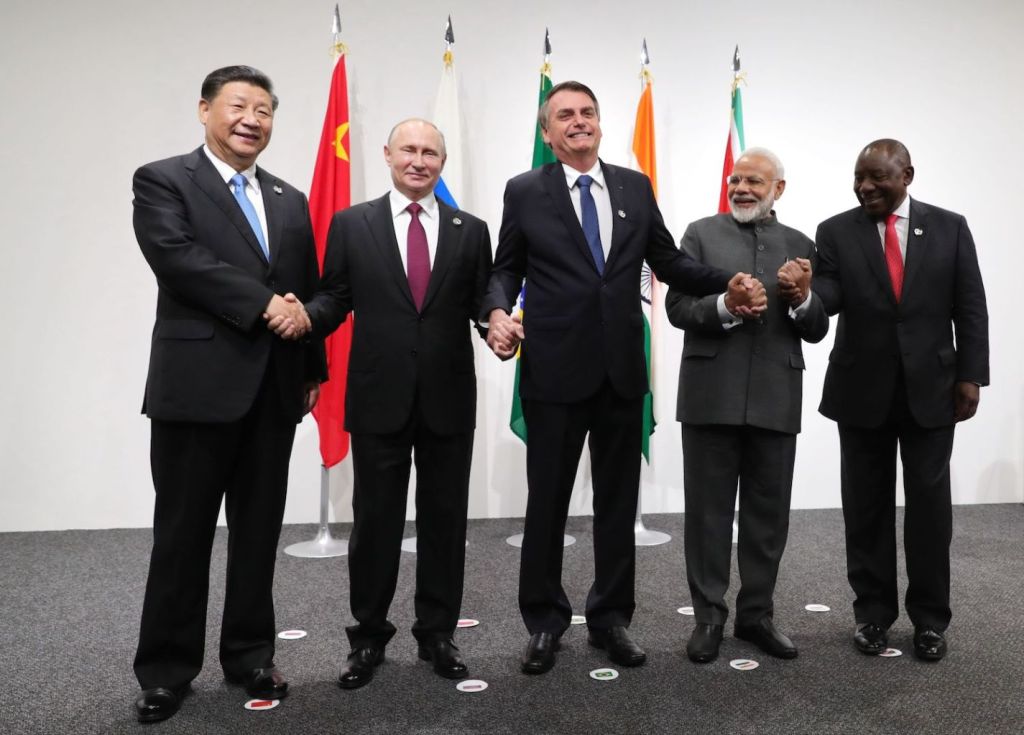
More than a month after Russian troops invaded Ukraine, there are still countries, especially from the developing world or the “Global South”, that have not condemned Russian aggression. These countries, representing large areas of civilization with large populations, are trying to play a more important role in the current system of international relations and to prevent any significant consequences for their economies as a result of the war in Ukraine. Therefore, in this regard, they are more than cautious in making unambiguous decisions that could negatively affect their relations with Russia. This group of countries includes China, India, South Africa, Brazil (virtually all members of the so-called BRICS economic bloc), the majority of ASEAN members, most Arab countries, as well as some Latin American countries.
China
China is the 2nd largest economy and the largest competitor of the USA in the world. Its growing importance in virtually all spheres of life cannot be overlooked. There are a lot of “talking heads” who believe that China will use the current war in Ukraine to its advantage. In fact, it is very early to assess the true nature of China’s relationship with Russia in the long term, but a meeting on 31 March 2022 between the Russian and Chinese Ministries of Foreign Affairs (S. Lavrov and Wang Yi) in China clearly demonstrated that China is currently much closer to Russia than any of the Western observations had thought. Both ministers condemned what they called illegal and counterproductive Western sanctions imposed on Russia. In addition, after the meeting, the Chinese minister described Sino-Russian relations as limitless. It is evident that although China does not publicly support the so-called Russia’s “military operation” in Ukraine, it openly criticises the US and NATO for provoking conflicts on Russia’s borders.
As we mentioned in one of our previous articles, China will carefully monitor the situation and try to carry out a very balanced policy towards Russia. Meanwhile, as a result of the war in Ukraine, China has already faced several undesirable negative challenges both in the economic and geopolitical fields. The conflict in Ukraine (with the passive / active participation of Belarus) has caused serious complications in the implementation of the Chinese Belt and Road Initiative (BRI) in Europe. In the context of the BRI, Russia and Belarus are considered important rail and road corridors for trade operations with Europe, but amid current conditions this cargo route is no longer stable. Moreover, as the conflict in Ukraine ensues, the price of many commodities (especially on oil and gas) has risen sharply, which, together with the recent COVID blockade in Shanghai, is having a catastrophic impact on the Chinese economy. Although China and Russia consider their relations to be very important, China would be careful in providing bank financing to its partner. According to the latest reports, Bank of China and the Industrial and Commercial Bank of China (ICBC), have restricted financing or purchases of Russian oil and this is possibly out of fear of becoming a subject of secondary sanctions.
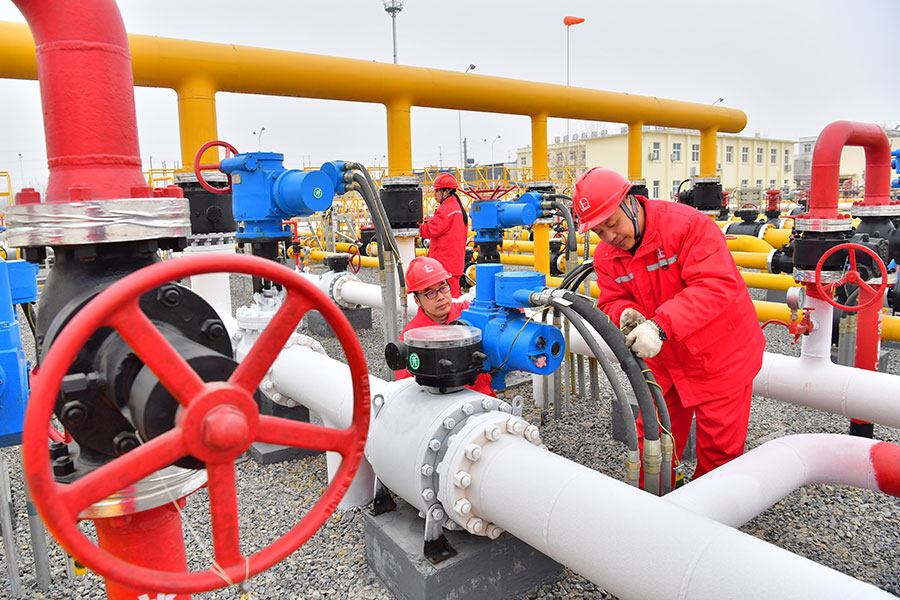
On the other hand, although military cooperation, including the supply of military equipment from China to Russia, may not take place, China will seek to strengthen economic and trade cooperation with Russia. One example is the mass issuance of Unionpay bank cards used for retail in Russia to avoid the restrictions of Visa and Mastercard in Russia. Some Chinese companies would like to take advantage of the window of opportunity following the withdrawal of Western companies from Russia. This could be the case with Huawei or other state-owned telecoms in China, which have been ostracised in both the US and European markets. At the same time, many large companies would be more cautious in entering the new market facing high risks. Some of them have already put on pause their projects in Russia, as was the recent case with Sinopec.
India
As some reports point out, India is somehow shaky in the question of Russia’s agression in Ukraine, being the only state from QUAD (The Quadrilateral Security Dialogue including USA, Japan, Australia and India) which has not condemned this action of the Kremlin. India has for long enjoyed the status of Cold War ally of the USSR and it looks that the latest war in Ukraine has not influenced New Delhi’s sentiment towards Moscow.
On the other hand we shall take into account that Russia is seen in India as a stable supplier of military equipment as well as an allied counterforce which may help India to minimize the chances of a possible conflict with Pakistan. What is more, India is very interested in buying cheaper Russian oil and gas. Trade in commodities will be much easier under a newly installed intra-bank system designed to avoid the US dollar in mutual payments.
Southeast Asia
Although the absolute majority of Southeastern Asian states (9 of 11) voted in favour of the UN General Assembly resolution reprimanding Moscow for its invasion, two important partners of Moscow, Vietnam and Laos, abstained from voting. At the same time, even the countries which voted for the UN resolution, tend to be as neutral as possible when evaluating the ongoing situation in Ukraine and try not to take sides in the conflict.
This specific response might be understood both from historic as well as from economic and trade points of view. Historically, the countries in the region have always tried not to interfere into the affairs of other countries (policy of non-interference), especially in the affairs which are literally seen as distant ones. When talking about the economic and trade aspect, Russia is seen as a significant trade partner of the ASEAN countries as well as their important arms supplier. In some countries, like Vietnam, the sales of Russian military equipment reaches around 80% of all military equipment imported. Russia has established very strong contacts on diplomatic and economic levels with Cambodia and the Philippines.
The Middle East and North Africa
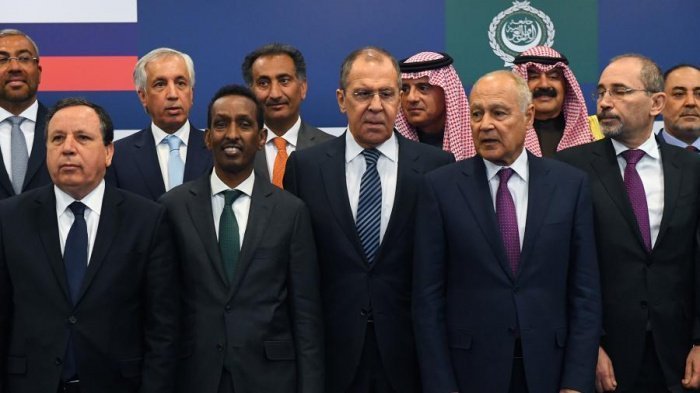
Although most Arab countries voted in favour of the UN resolution reprimanding the Russian invasion, they do not publicly condemn this aggression to avoid harming their ties with Moscow. The looming Ukrainian crisis threatens the Arab world with serious economic consequences, primarily in terms of food security. Most Arab countries (including the states of North Africa and the Middle East) import between 20% (Yemen) and 80% (Egypt) of their wheat from Russia and Ukraine, according to a report by the Washington-based Middle East Institute (MEI). The ongoing conflict in Ukraine (which, along with Russia, is also a major supplier of grain to the region) has led to a significant increase in grain prices on the world market. The situation could worsen as the ongoing conflict prevents Ukraine from planting enough grain this year. The surge in oil prices, as well as the reduction in the flow of tourists from Russia and Ukraine, which is also very painful for the region, primarily for Egypt, is another challenge that the Arab countries are facing now.
Turkey has condemned the Russian invasion, but it has refused to join in the harshest anti-Russian sanctions. Turkey is trying to pursue a very balanced policy towards Russia, as it understands the role of Russia in the Caucasus region with possible consequences for the Nagorno-Karabakh issue. At the same time, Ankara acts as an intermediary and provides platforms for negotiations between Russia and Ukraine. Turkey is also one of the largest arms suppliers to Ukraine. The UAE, along with China and India, refrained from adopting a UN resolution condemning the invasion, in a position deemed favourable to Moscow. Russia has developed a special relationship with the Houthis in Yemen (the Houthis are among the few countries that have recognized the Donetsk and Luhansk republics), and they have leverage to prevent any Houthi missile strikes against the UAE. The UAE leadership is well aware of this and is trying to maintain stable relations with Russia.
Russia is also trying to avoid damaging relations with the Arab countries, especially considering the significant market this region provides for its weapons sales. Russia’s portfolio of defence orders from African countries is around $14 billion, of which about $11 billion is in North Africa, where Algeria and Egypt are Russia’s main partners.
While there is no need to explain Iran‘s neutral stance towards Russian aggression, the Saudi Arabia example is far more complex. Saudi Arabia, considered one of the US allies in the region, did not succumb to pressure from the US, which wanted Riyadh to increase oil production amid rising energy prices. In the context of Saudi Arabia’s influence on the world gas market, the position of Algeria and Qatar, the largest gas exporters, is also important. So far, they cannot replace Russian gas in Europe, but negotiations on the supply of liquefied gas with individual European countries are already underway.
The countries mentioned in this analysis represent only a tiny fraction of all 195 countries in the world, but given the population and economic influence of these countries, the anti-Russian alliance is not as overwhelming as it seems. The ouput of only China, India and the Arab countries together make up about 30% of the world economy, and the population of these countries makes up about half of the world’s population. Obviously, the war in Ukraine will lead to global tectonic shifts in the world system of international relations, as well as to long-term economic consequences that we have yet to see.
Make a one-time donation
Make a monthly donation
Make a yearly donation
Choose an amount
Or enter a custom amount
Your contribution is appreciated.
Your contribution is appreciated.
Your contribution is appreciated.
DonateDonate monthlyDonate yearly Global News Insider