
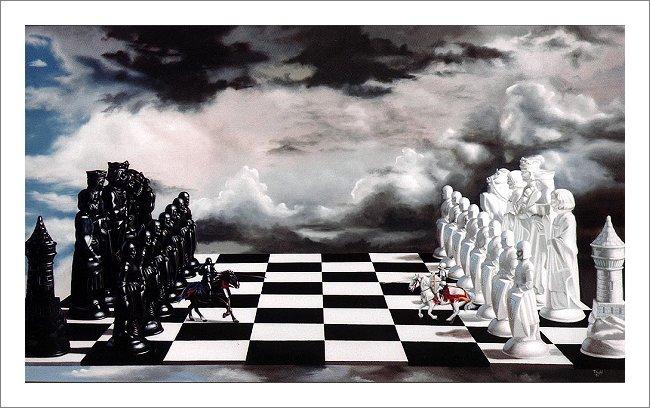
“Without Ukraine, Russia ceases to be an empire, but with Ukraine suborned and then subordinated, Russia automatically becomes an empire.” Zbigniew Brzezinsky (Photo: The Other Philosopher)
The Western media has recently been inundated with publications about the coming war in Ukraine and the inevitable military intervention of Russia in its “Drang nach Westen”. Even respected think tanks predict that Russian military intervention is inevitable and that Russia will send troops into Ukraine under any pretext. This hysteria about the biggest security threat in Europe in recent years was initially set on fire by U.S. intelligence claims about a growing concentration of Russian troops near Ukraine’s borders and reports of a very possible military intervention in early 2022. Leaders, including EU heavyweights such as French President Emmanuel Macron (France takes over the Council of the EU Presidency in 2022) and new German Chancellor Olaf Scholz, speak of the risk of conflict in Ukraine as the highest possible. Is a conflict with Russia really inevitable, or is this hysteria just a pretext for a new geopolitical order that will not be accepted by either society or NATO members in peacetime? One might wonder if Chatham House, like other politicians talking about an imminent war in Ukraine, is simply exaggerating? On the other hand, it is clear that Russia, through media coverage, is perceived as one of the biggest security threats in Europe, flexing its muscles on the border with Ukraine.
The big “chess game” on the map of Europe
If we assume that not only Russia but also Ukraine is concentrating its troops in the respective regions (Russia on the border with Ukraine and Ukraine on the line of contact with the republics of Donbass), it becomes clear that the situation in Donbass is far from stable. But does this mean that another escalation will lead to a military conflict? There is no interest among European countries in a real large-scale military conflict, but at the same time, we shall point out that the possible outcomes of such a conflict in Ukraine will vary greatly among the largest stakeholders:
USA
In the event of a military conflict in Ukraine or even a possible partial de-escalation in the future, the United States will use a “win-win” strategy. Since the nuclear powers have recently signed a very important agreement on the non-use of nuclear bombs, a nuclear conflict in Ukraine (even the use of tactical nuclear bombs) is almost impossible. This means that the military conflict in Ukraine, under any scenario, will take the form of a conventional war waged predominantly with conventional weapons. In the event of a conventional conflict, the US will be able to effectively practice its ability to fight the Russian military far from US borders and very close to Russian borders through proxies (Ukrainian soldiers) using US military equipment. On the other hand, if the current situation de-escalates, but still given the growing security threat in eastern Ukraine, the US will receive more respect from NATO partners, especially within the EU. The latter will increase their military spending and contributions to the NATO budget against the backdrop of a growing security threat from Russia. The role of the US security provider will only grow in Europe and NATO. The United States will benefit from any development of the situation in Ukraine.
France
Emmanuel Macron is trying to take a leading position in Europe, especially on issues that have a huge impact on European security. The Merkel era has come to an end, and with France taking over the Presidency of the EU Council, Macron’s active approach to issues of wider European influence, both in terms of economy and security, looks quite logical. But, on the other hand, taking into account the fact that France has always tried to pursue its own foreign policy approach, especially in relation to Russia. This means that France will try to make every possible diplomatic effort (including within the framework of the Normandy format) to prevent any military conflict in Ukraine.
Germany
Germany, along with France, Ukraine and Russia, is a member of the Normandy format, created for negotiations on the implementation of the Minsk agreements. (For more on the Minsk Agreements, see here.) Germany’s role in the latest resolution of the crisis in Ukraine is crucial, but as we have seen lately, the new German government is not united when it comes to making concerted action and statements on the Ukrainian issue. Germany leaves more room for diplomatic negotiations and is generally not ready to abandon the Nord Stream 2 project. Even Ukrainian experts say that Germany is not happy with the proposal to cut Russia off from the SWIFT system for interbank payments. This sanctions measure will have a loss-loss effect on both the Russian and German economies. Moreover, Germany has not sent any military equipment to Ukraine, which has caused numerous questions in Kiev, as well as among NATO member countries.
The real stakeholders and subjects which play the second fiddle
As we come to assess the role of each stakeholder, we must keep in mind some very important facts. The risks that stakeholders face are very different, especially when we take the EU and the US. The United States do not have gas dependence on Russia (as is the case with Europe), their territory is not under direct threat, and they are not threatened by a possible migration crisis, which could disrupt in the event of a military conflict in Ukraine, displacing thousands of Ukrainians mainly in the CEE countries. Moreover, there is no unity in approaches to Ukraine even within the EU. When it comes to realpolitik, the US and Russia are the main negotiators, with European countries playing second fiddle. When making a decision on this issue, it is necessary to take into account the size of the inherent risk.
China
China’s position may be simply described by the famous Chinese proverb: “An intelligent monkey watches the battle of two tigers from a tree.” China hosts the Olympic Games, openly criticizes NATO expansion, but at the same time is not ready to create a real military or economic bloc with Russia. It is much more profitable for China to watch the two powers fight each other. If sanctions are imposed against Russia, China will receive additional leverage to influence the price of gas imports from Russia.
Russia
The latest escalation on Ukraine’s borders is part of Russia’s latest tactical move to create security uncertainty in Europe and thus push NATO back to the negotiating table and spark a discussion on issues of concern in the Kremlin. The impasse in the implementation of the Minsk Agreements, along with Russia’s growing confidence in its own forces on the world stage (Syria, Kazakhstan), is pushing Russia to actively project its security concerns into real geopolitical actions.
What will happen next: In our opinion, there are two most possible scenarios:
- Russia will use the presence of its troops at the Ukrainian borders to push Germany and France to the negotiating table within the Normandy format. Germany and France must convince Ukraine to make concessions on the status of the Lugansk and Donetsk republics within Ukraine and begin to implement the Minsk agreements. This process can take weeks or even months, and psychological pressure, as well as uncertainty about the future, will force the parties involved to make some sort of decision. At the same time Russia will try to use the latest escalation and rising security tension to push the USA to reform security order in Europe which shall take into account Russian security concerns.
- In case the first scenario does not work, the President of Russia will accept the proposal of the Russian Duma to recognize the Lugansk and Donetsk republics as two independent states. As a next step, Russia will establish diplomatic relations with two new (similar to the South Ossetia recognition) states and build its own military base in these countries. This scenario will mean a new round of sanctions against Russia, as well as the end of Ukrainian dreams of the reintegration of Donbass into Ukraine. A possible military solution to this problem would mean that Ukraine would fight with regular Russian troops.
 Global News Insider
2 responses to “Mass hysteria about the “imminent” war on Ukraine. What are the most possible scenarios of the future development in Ukraine?”
[…] we mentioned in one of our previous articles, China will carefully monitor the situation and try to carry out a very balanced policy towards Russia. Meanwhile, as a result of the war in […]
[…] we mentioned in the previous article there existed a high possibility that the Russian forces might in the foreseeable future fight […]