
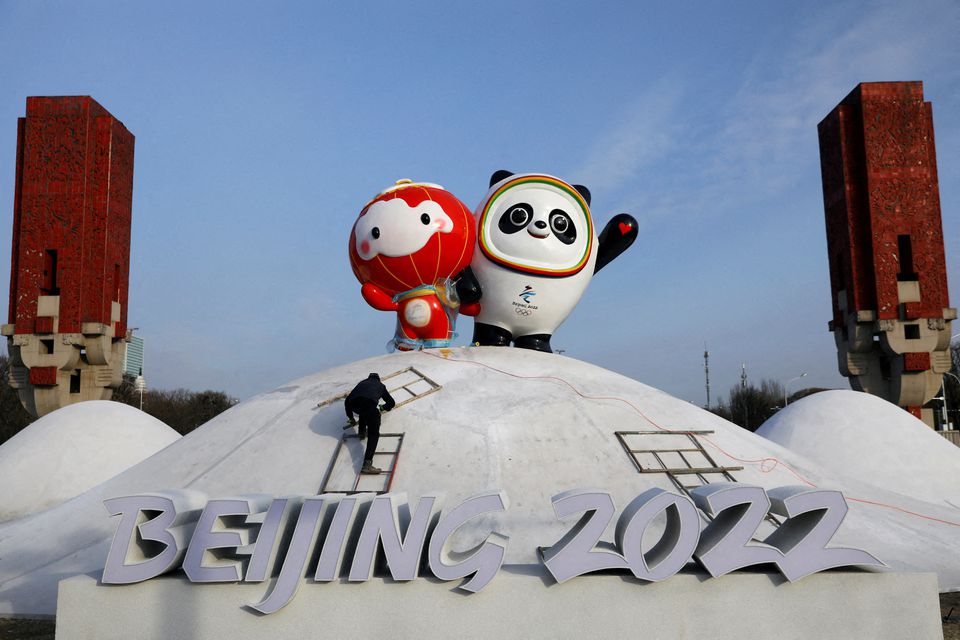
Photo: Reuters
Author: Igor Zarodov (Russian expert on China and sinologist)
Contrary to the generally accepted ideological imperative and the Olympic ideal that sport and politics should not influence each other, the fact that politics is involved in sport cannot be denied in the modern real world. The victories of athletes and the sports industry as a whole are used to achieve political goals. Sport is one of the key tools of a successful “soft power” strategy that all countries are trying to engage in. China is not an exception here.
Sport successes are directly related to economic policy and the political situation inside the country and sports victories add status and recognition to any country. China has been successfully developing the sports industry for many years.
The 2008 Olympic Games in Beijing were truly a triumph for Chinese sportsmen on the world stage: Chinese athletes won 100 medals and received the largest number of gold medals – 51. Despite the traditional accusations of the West against China and the mass riots in Tibet taking place at the same time, the 2008 Olympic Games were organized at a high level and they clearly demonstrated to the whole world that China is a modern, rich and secure country.
The geopolitical goal of the Olympic Games within the concept of “soft power” is to raise the status of the country in the international arena, creating its positive image, as well as to attract a huge number of tourists and foreign investment in the development of the country. Such a large-scale sporting event is also an important tool used for domestic policy: to promote a healthy lifestyle and developing national sport bases. The goal is to unite the country, support patriotism, develop a new way of thinking or “winners’ mindset”.
There is no surprise that China wanted to repeat the success of the 2008 Olympics. However, in 2022 everything went according to a different scenario.
How much does it cost to host the Olympics?
The average cost of hosting sporting events is US$12 billion. Infrastructure costs are several times higher. At the same time, since 1960 each Olympics has exceeded the initial budget by an average of 172%.
The most expensive Olympics in history were the Winter Olympic Games in Sochi 2014 (more than US$50 billion), in second place were the Summer Games in Beijing 2008 (more than US$40 billion).
The cost of the 2022 Beijing Olympics: Initially, China stated that the cost of organizing all sporting events would be impressively low (less than US$4 billion). After the bright and “expensive” 2008 Olympics, China has decided to make its second Olympics “simpler”. The possibility of using the legacy of the 2008 Olympics (reconstruction of sports facilities, rather than building new infrastructure from scratch) spoke in favor of significant savings. However, if we consider the cost of the 2022 Olympics as a whole as a project, then its cost is estimated at an impressive US$39 billion, including 20 billion for infrastructure and more than 9 billion for an unmanned high-speed train linking the Olympics venues.
“Green, safe, simple”
Chinese President gave a brief description of the motto of the 2022 Olympics: “Green, safe, simple.”
China’s idea was to use the Olympics as a venue where its latest breakthrough technological advancements may be showcased: robotics, transport and logistics solutions, security systems and others, but most importantly – green economy technologies. The energy sources for the Olympics are expected to be 100% clean. In order to achieve this unprecedented aim the necessary expensive power grid infrastructure was built. Green solutions were supposed to be a distinctive feature of these Olympic Games.
However, in the context of a total fight against the spread of COVID-19 in China, it is the very definition of “safe” that has become the real symbol and priority of the 2022 Olympic in Beijing. Foreign delegations arriving in China only talk about unprecedented security and control measures.
The 2022 Olympics went wrong for China
COVID-19 restrictions drastically affected the tourist flow to the Olympics and subsequent periods, which is negative both in terms of economic losses and in terms of opportunities to promote the positive image of the country.
According to sports experts, the Winter Olympics 2022 do not promise to be victorious for China in terms of sports results. Even in an optimistic medal forecast, it is expected that China will not rise above the 3rd-4th place in the team standings, in the case of a pessimistic scenario, China will not even enter the top 10. It should be noted that the condition of athletes from China is difficult to objectively assess, since Chinese sport associations have not participated in many international tournaments during the pandemic.
A diplomatic boycott of the Olympics amid political tensions has been a hot topic in recent months. The United States was the first to announce a diplomatic boycott of the Beijing Olympics. Australia, United Kingdom, Canada and Japan, Estonia, Denmark and the Netherlands followed. Government officials of these countries practically refused to visit the Olympic Games.
If in 2008 altogether 66 foreign leaders came to Beijing for the opening ceremony, now only 23 leaders are expected to come. But the boycott is not the main reason for low participation. Obviously, there are strong COVID-19 concerns. The main reason for the lower number of leaders participating in the opening ceremony is the number of countries competing in the Olympics: if in the 2008 Summer Games there were 205 participating countries, there are only 91 countries taking part in the 2022 Winter Olympics. For objective reasons, most of Africa, Oceania and other countries where the winter sport activities are very exotic are not represented.
The issue of the boycott of the Olympic Games is an evident demonstration of the relationship between sport and politics. The most striking example of this interdependency was the West’s boycott of the 1980 Moscow Olympics, and the retaliatory Soviet boycott of the 1984 Olympics in Los Angeles. In the 2000s this practice has resumed; however, we are no longer talking about a full-fledged sports boycott, but about a political boycott: first there were attempts to boycott the 2008 Summer Olympics in Beijing, then the 2014 Winter Olympics in Sochi.
Sport and politics
In the modern information society and amid the spread of “soft power” technologies, large-scale international events such as the Olympics with a multi-million audience is an important political tool employed by leaders both in the international arena as well as in domestic policy.
Talking about domestic politics, the Chinese leader has special expectations from the Olympics. His ambition is to ensure the success of the Beijing Olympic and Paralympic Winter Games, which should bolster his credibility ahead of the 20th Communist Party Congress later this year. The Olympics is an important opportunity for the President to demonstrate his political capacity and stability to the whole nation .
From an international point of view, the China-Russian summit and a state visit to China by the Russian President taking place during the Olympics, will be seen as a “cherry on the cake” of Beijing’s “Olympic diplomacy” in modern times.
“Sports diplomacy” has appeared relatively recently and has been in the process of its conceptual formation. However, it is clear without further ado that the successfully held Olympic Games gives the host country and its leadership a trump card in this diplomatic game for many years to come.
 Global News Insider
Leave a comment