
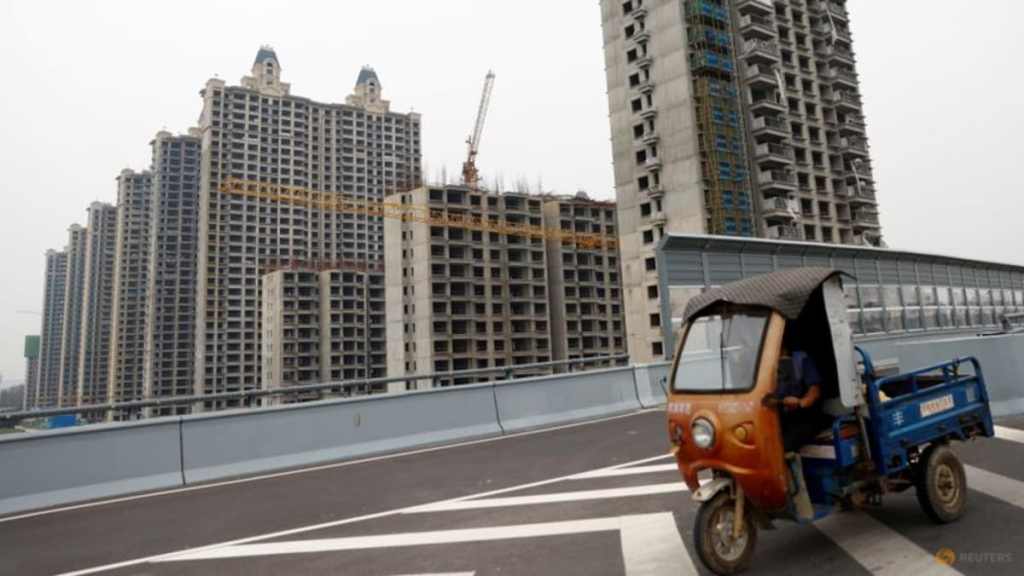
People watching the stock markets have certainly noticed that the Chinese property developer Evergrande’s liquidity crisis shook stock markets in Asia, Europe and the US. On monday the shares of Evergrande fell by almost 10% and the bad trend will continue. (The shares of Evergrande have already fallen by 80% this year). Yesterday’s slump in shares‘ price is the market’s reaction to the company’s insolvency, which awaits the maturity of two types of its bonds on Thursday in the amount of 83.5 mil. USD and 48.4 mil. USD. However, property developer already admitted that it is under great pressure and may not be able to meet its debt obligations on Thursday. On Monday, the Shanghai Stock Exchange paused trading in Evergrande’s May 2023 bond after it fell more than 30%. According to some observes, the consenquences of the developer’s collapse could be catastrophic. Let us remind you that the company’s total debt is about $ 300 billion, which is roughly 2% of China’s VAT.
What does Evergrande do? China Evergrande Group is China’s largest development company. It is one of the 150 largest companies in the world by revenue. It is listed on the Hong Kong Stock Exchange (ticker 3333) and was established in 1996.
Evergrande‘s main activity is real estate and according to sales it is the second largest developer in China. Evergrande owns more than 1,300 real estate projects in more than 280 cities in China. The company has seven units operating in a wide range of industries, including electric vehicles, wealth management, healthcare services, consumer products, video and television production units and even an amusement park. The company claims to have 200,000 employees, but indirectly creates more than 3.8 million jobs a year, according to its website. Evergrande stocks and bonds are included in indices in Asia. He also owns one of the best Chinese football teams, FC Guangzhou.
Indebtedness is the common denominator for the entire real estate sector in China. This is due to the long-term lack of regulation of the financial and non-banking market (practically until 2020, more on the regulation see here), which has led to virtually uncontrolled increases in real estate prices, megalomaniacal construction and an increase in Chinese developers’ debt in China. One of them is Evergrande.
However, this problem did not arise today. We talked first to the Chinese experts about this topic a few months ago and then it was already clear that Evergrande would not have enough liquidity to pay off its investors. CNN, BBC, European observers and the Western media in general fear (or deliberately swell this topic) that Evergrande will be another Lehman Brothers that will cause a domino effect in China and cause a financial crisis in China as the world last saw in 2008. In our opinion, this is a very exaggerated statement.
Paradoxically, apart from the already existing fact of its great indebtedness, Evergrande’s recent insolvency is partly caused by the company’s efforts to conform to a new state policy to control the total debt level of major property developers. In essence, in 2020 China marked three red lines that no developer can cross. They are as follows:
- Liability-to-asset ratio (excluding advance receipts) of less than 70%
- Net gearing ratio of less than 100%
- Cash-to-short-term debt ratio of more than 1x
What did Evergrande do to meet these strict rules? It started selling its real estate at a discount to secure liquidity. However, the pace of real estate sales was declining n 2021 and there is no sufficient cash generated for the company to pay off the debts. Earlier this year, Evergrande unveiled plans to separate its three unlisted units – the Fangchebao online real estate, car market and amusement parks and spring water businesses – to further free up capital. Fangchebao raised $ 2.1 billion in pre-IPO in March. However, as early as August, the company said its plans to sell assets and shares to alleviate liquidity problems had failed to make significant progress. The company is out of cash to epay its debts.
From the policy prospect, Evergrande may serve as an example for other developers. That implies that it is very important for Chinese developers to behave according to the rules strictly stated by the government. Too much leverage, taking loans from unregulated non banking entities, providing unsecured high coupon wealth products to its employees only to keep the operation of the company afloat are the specific tools of making business which are not more accepted in China. The success of Evergrande was based on the constant rise of the properties and all means were used by the management only to generate profit with limited social responsibility.
Addendum: It is highly likely that many investors will lose their money. During the necessary restructuring process which probably will take place and controlled sale of the company’s assets, the largest investors will be paid out. Foreign and small Chinese bondholders will lose their investments or their contracts will be amended. The state or a state-mandated consolidation company will directly supervise the sale of assets process. When settling debts, Chinese investors will possibly be given priority over foreign ones in an unequal swap, which will of course be a bad signal for future investments in Chinese stocks. It is interesting that last month, offers to buy bonds from Chinese and overseas bondholders actively circulated on Chinese social networks. So today’s insolvency was not unexpected. We do not see how the banks fixed their positions, but they will be prioritized primarily from the sale of assets. Evergrande‘s suppliers and contractors will receive the company’s physical assets as part of debt settlement. But no Lehman Brothers II will occur…
Make a one-time donation
Make a monthly donation
Make a yearly donation
Choose an amount
Or enter a custom amount
Your contribution is appreciated.
Your contribution is appreciated.
Your contribution is appreciated.
DonateDonate monthlyDonate yearly
 Global News Insider
Leave a comment