
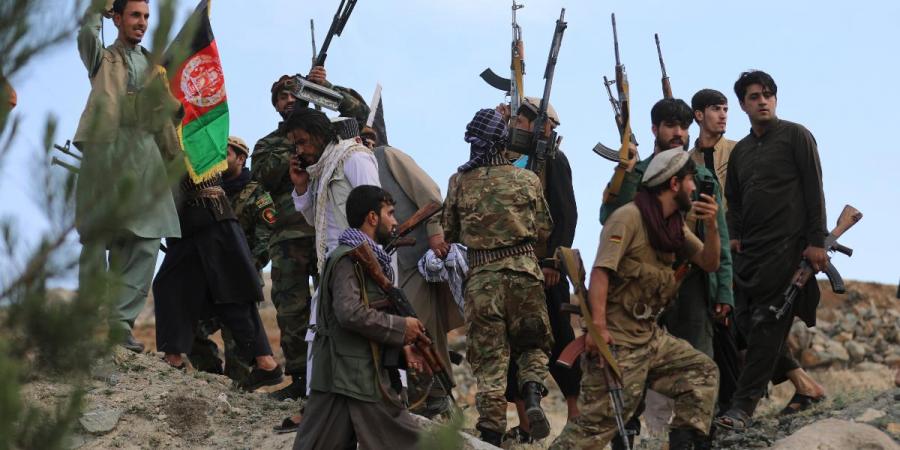
- Shortly after the withdrawal of US troops from Afghanistan, the situation has worsened and the Taliban has begun its military operations.
- The Tajik government asks the CSTO to help resist Taliban pressure on the border with Afghanistan. Will Russia send troops to the Tajik border with Afghanistan?
It was more than predictable that after the unexpected withdrawal of US troops from Afghanistan, the situation in the country would deteriorate. And today, only some weeks after Biden’s administration made an official decision to put an end to the protracted US mission in Afghanistan, Taliban is taking momentum to strengthen its positions in this Central Asian republic of “perpetual instability”. Whether it was the new US President or its advisors who made the decision to withdraw troops, it does not really matter, but the stakes are high not only for Afgani people, but for all the countries neighboring with Afghanistan in the region. The first signal came from Tajikistan.
Afghan government forces have suffered a series of painful defeats in recent days from the Taliban. As a result, the regular units were forced to retreat to the territory of neighboring Tajikistan and Uzbekistan, raising the concern of Tajik government which immediately called CSTO (The Collective Security Treaty Organization) for help. As the situation is directly posing a threat to the national security of Tajikistan which is a member state of CSTO structure, in the near future a decision should be made within this organization on how to tackle the current challenge from Taliban.
Afghanistan lost control of 13 regions to the Taliban in just one day – something that has not happened since the beginning of the Afghan civil war. The worst is the situation in the north, in the provinces adjacent to the former Soviet republics of Tajikistan and Uzbekistan. As a result of the Taliban anti-government military operation, more than a thousand Afghan border guards and soldiers fled to Tajikistan . Today the Taliban controls over 70% of the 1,344 km long Afghan-Tajik border.
Tajikistan will hardly be able to control the border with Afghanistan on its own. This means that in the near future the question of the return of Russian border guards to the border may arise. Moscow cannot abandon the secular regimes in Dushanbe, Tashkent, Ashgabat and Bishkek. The radicalization of the population of Central Asia would be a disastrous scenario for the Russian authorities, given that millions of people from these republics work in Russia.
On July 8, consultations were held in Moscow between the special representative of the Russian president for Afghanistan and emissaries of the political office of the Taliban movement headquartered in Doha. During these consultations, the Russian side received assurances from the Taliban that the group does not intend to violate the border of Tajikistan, as well as other countries neighboring Afghanistan. Moreover, representatives of the Taliban movement stressed their interest in building good-neighborly relations with all states in the region.
In our opinion (Globinsider), the approaches of Moscow and Washington to the further development of Afghanistan are fundamentally different. Since Moscow has always tried to maintain good working relations with all players in Afghanistan, including the Taliban (which is considered as a prohibited group in Russia), the US has relied largely on the Afghan government and the current president. The Russian approach is now seen as very productive because it opens the door to direct negotiations with the growing power in Afghanistan – the Taliban. The United States made a unilateral decision to withdraw, leaving the Afghans to solve their problems alone.
“The US operation in Afghanistan ended in complete failure, and the responsibility for it rests entirely on Washington.” This is what we have been hearing lately from many observers and experts when describing the current situation in Afghanistan. The US President believes that the Afghans will resolve all their issues themselves, including relations with the Taliban. On the other hand, Taliban itself is one of the key players in Afghanistan and the future political setup in the country must be built on an inclusive approach, not exclusionary one. This means that Taliban shall be invited to the negotiation table together with other regional political players representing Uzbeks, Pushtuns and Tajiks in order to find a compromise on the political settlement for the coming years. As the situation in Iraq has shown, the political order and stability, orchestrated by the United States, can end as soon as the last American soldier leaves the country. The same thing happened now in Afghanistan, where the government army, trained by American professionals, lost confidence and resilience immediately after the first military contact with the Taliban.The situation in Afghanistan cannot be resolved by external intervention alone; a national consensus must be reached to build peace and stability in Afghanistan. “Twenty years of the US and NATO campaign in Afghanistan have proven that the presence of American military bases does not contribute to strengthening stability and security in the region”: says Russian special envoy for Afghanistan.
 Global News Insider
Leave a comment