
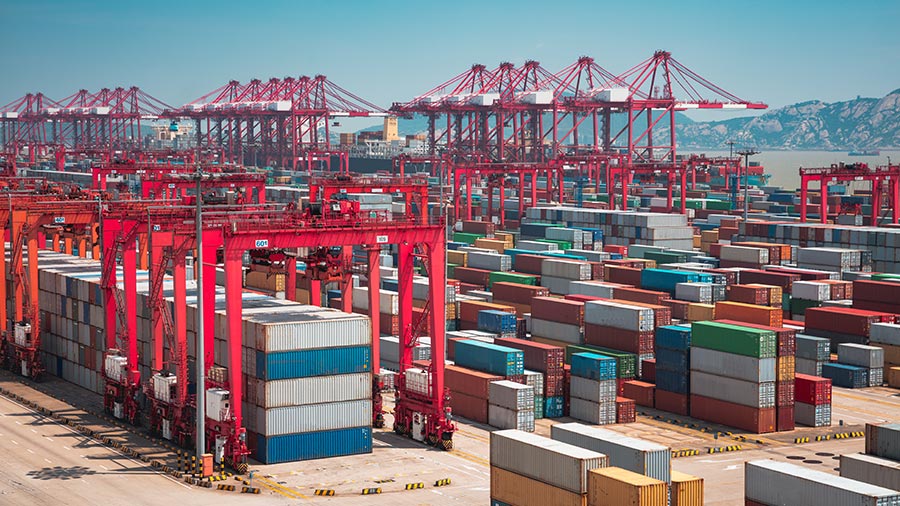
- With the Chinese economy returning back to normal, we have witnessed a significant growth of its exports which comes amid the rise in prices on global commodities. As a result, China is exporting inflation to other continents.
- More and more western countries want to significantly lower their dependence on the Chinese manufacturing capabilities, but there is no clear understanding how to achieve that.
As some media have pointed out recently, the post pandemic global economy is struggling with rising inflation. In some countries it takes the form of so-called “hidden” inflation, when only the prices of real estate properties are on the rise, but in some countries the prices are starting to grow in the retail segment as well. As the New York Times debates, Chinese post pandemic growth of export is responsible for the latest wave of inflation globally. But there should be no prejudice against China in this respect, since China is still the world’s largest manufacturer and exporter and any change of price on the Chinese manufacturing side would have a direct implication on the goods’ prices on other continents.
But one thing is important to look at when talking about inflation. The prices grow as the result of the volatility on the market with commodities. Prices on oil, basic construction materials such as cement and steel, chemicals and other raw materials are on the rise which has an incremental implication on the prices of goods coming from the gates of the Chinese factories. As a result, stocks of the oil and steel companies have skyrocketed lately. The Chinese are trying to tame inflation either by regulating goods prices or by freezing production of some goods. But the largest importers of their goods (USA is by far the largest importer of “Made in China” goods) are already feeling the inflation burst.
With the postpandeminc production rebounce, we have witnessed a massive growth of export from China to other countries and as the global economy is interconnected and global production chains neglect political friction, no matter how effective measures will be taken by Beijing, the inflation pressure will continue to grow. And China should not feel guilty for that. On the other hand, as the Chinese economy is returning back to its pre pandemic growth and thanks to the governments pumping money into the economies, there is a high risk that the inflation rates will continue to grow.
One of the measures to manage the risk of importing inflation from China is to lower the imports from China or to relocate the production to other countries. This would mean a complete restructuring of the current global manufacture and supply chains and lowering the dependence of the Western corporations on the Chinese production capabilities. But this is only a theory and even relocation of the production to other Asian countries must become subject to deeper financial valuation. The argument that the price of labor force is cheaper in smaller Asian countries is not sufficient enough, especially as these countries significantly lag behind China in infrastructure capabilities. And there is also another issue, which shall be analysed properly. As a result of the pandemic there has been a shortage of semiconductors on the global market, which forced many European and American manufacturers to limit their production. Semiconductors are crucial in technological progress and the shortage of these goods led many governments to attach more attention to this issue. A very good insight on the global semiconductor supply chain has been given in the latest study by Metrics, which sheds a new light on existing interdepencies throughout this value chain and the role China is playing in this respect. But the truth is, that the issue of semiconductors is too politicized, as the semiconductors are becoming the subject of Sino-Western rivalry for technological dominance.
At the same time, Western countries have become more hawkish on China especially on issues like Hong Kong democracy suppression, repression of Uyghurs, military activity in the South and East China seas, cyber espionage and therefore use every opportunity to downsize the Chinese Belt and Road Initiative. On the other hand, according to the South China Morning Post (which usually uses a rather critical tone towards Beijing), there hasn’t been yet published any convincing study or argument that the Belt and Road Initiative is succeeding, either as a development model or in terms of advancing Beijing’s strategic interests. The US Innovation and Competition Act says the initiative advances Beijing’s security interests but no evidence for this claim has been provided yet. There is a need for an unbiased approach both in analyzing the pros and cons of the Chinese initiative as well as in assessing the true reason for the inflation rise. G7 countries have already proposed their plan of boosting infrastructure projects in developing countries in order to counter China’s Belt and Road Initiative. It seems to us that more inclusive development policy should be proposed rather than pushing forward some kind of theoretical framework which aims to counter the opposing party.
The connotation used in connection with China as the inflation exporter is therefore the product of biased simplification and is true only to some extent. The global economic interconnectivity, interdependence, loose fiscal and monetary policy of the central banks all around the world, rise in price of commodities – these are the factors which are responsible for the recent burst of inflation.
 Global News Insider
Leave a comment